
If you’ve ever had a plumber ask to access your sewer cleanout and you had no idea where to look, you’re in good company. Sewer cleanouts are one of the most overlooked features of a home’s plumbing system, and on older properties throughout Ukiah and Mendocino County, they’re frequently buried under decades of soil, landscaping, or concrete.
Knowing how to find a buried sewer cleanout can save you significant time and money. When a plumber can access the cleanout directly, it makes drain cleaning, sewer inspections, and line clearing much faster and more effective. Without it, jobs that could take 30 minutes can turn into hours of excavation or invasive access through your home’s interior plumbing.
At AAA Organized Plumbing, we help Ukiah homeowners locate and expose buried cleanouts regularly. Here’s a practical guide to finding yours, along with advice on what to do once you’ve located it.
A sewer cleanout is an access point, typically a capped pipe, that connects directly to your main sewer line. It’s designed to give plumbers a way to insert tools like augers, hydro-jet equipment, or sewer inspection cameras into the main drain line without having to go through your home’s toilets or other fixtures.
Most homes have at least one main cleanout, and many have several. Common locations include near the house foundation, in the front or back yard, along the side of the house, or near the street where the sewer lateral meets the municipal sewer main.
Cleanouts matter because they are often the fastest and least disruptive access point for diagnosing and clearing sewer line problems. If your cleanout is buried or inaccessible, even a routine drain service can become a much bigger job.
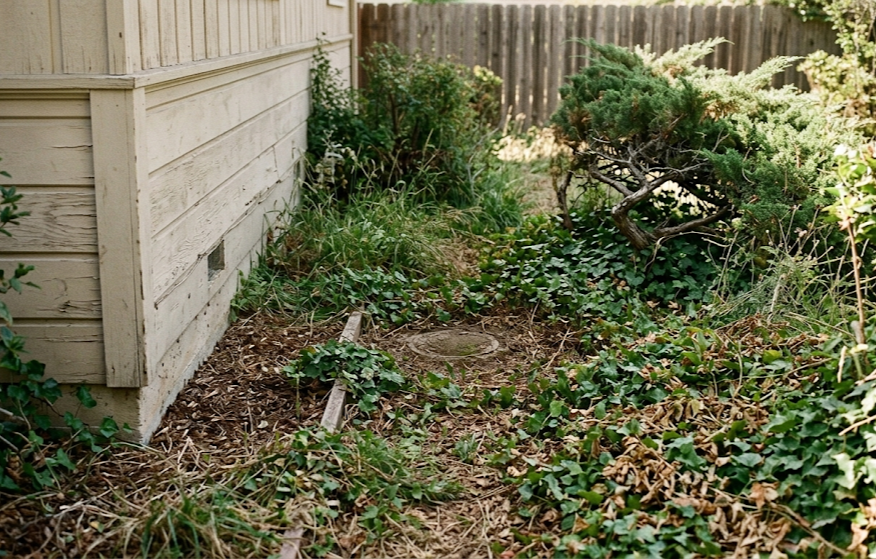
Ukiah and the broader Mendocino County area have a mix of housing stock, with many homes built in the 1940s through 1970s. In that era, sewer cleanouts were often installed flush with the ground or just slightly above grade. Over the years, landscaping, mulch, grass, soil settling, and concrete pours have gradually buried them.
Renovation projects are another common culprit. When a patio is poured, a garden bed is expanded, or a driveway is repaved, the cleanout cap can easily end up covered without anyone realizing it.
In some cases, especially in older Ukiah properties, the cleanout may not be obvious from above ground at all. Cast iron caps corrode and become discolored, plastic caps fade and sink, and vegetation grows over everything. If the previous owners had no idea where it was, it’s unlikely they passed that information along.
Finding a buried cleanout takes a bit of detective work, but it’s usually manageable with the right approach.
Start with paperwork. Your local building department, utility company, or city public works office may have records of where your sewer lateral and cleanout were installed. In Ukiah, the City of Ukiah’s Public Works department may have records for properties connected to the municipal sewer system. For older homes, these records can be spotty, but it’s worth checking.
If you purchased your home, the inspection report from your sale may also note the location of the cleanout.
Your main sewer lateral runs from your home to the street or to a septic system. The cleanout will typically be somewhere along that path. Think about where the main bathroom or kitchen stack exits your house. The cleanout is usually within 5 to 10 feet of the house foundation, somewhere along the straight line between your home and the street.
Look for a slight depression or raised mound in the soil. Over time, the presence of a buried pipe can affect how the soil settles, sometimes leaving a subtle visual clue.
Cleanout caps come in different materials depending on the era of your plumbing. Older homes in Ukiah often have cast iron cleanouts with threaded caps. Newer cleanouts typically use PVC with a white or green cap. The cap is usually a few inches in diameter, round, and may have a square or hex nut fitting in the center.
Walk the likely path from your house to the street and probe the soil gently with a thin metal rod or screwdriver. A hollow thud or the feel of hard plastic or metal at a shallow depth may indicate you’ve found it.
If probing the soil by hand isn’t getting results, a basic metal detector can help locate cast iron or steel cleanout caps that are buried under several inches of dirt or mulch. This is a particularly useful technique on properties where the cleanout is known to exist but its exact position is unknown.
If all else fails, a professional sewer camera inspection is one of the most reliable ways to find and map your cleanout’s location. A camera is inserted through an accessible drain inside the house, and as it travels through the line, a locating transmitter in the camera head sends a signal that our technicians can detect from above ground. This tells us exactly where the sewer line runs and where the cleanout is located.
Our drain cleaning and sewer line services team uses this approach regularly for Ukiah homeowners who can’t locate their cleanout visually.
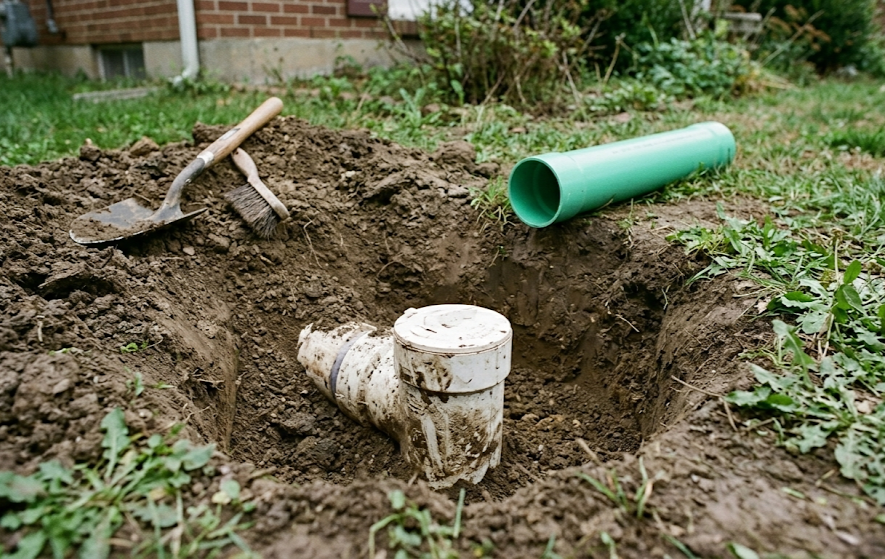
Once you’ve located the buried cleanout, here are the next steps:
Expose the cap carefully. Dig down to the cap using a hand shovel, being careful not to damage the pipe. Remove accumulated soil and debris.
Inspect the cap and surrounding pipe. Look for cracks, corrosion, or damage. A damaged cap or cleanout body should be repaired before you rely on it for future service.
Mark it for the future. Install a cleanout riser or extension if the cap is significantly below grade. This brings the access point up to ground level and prevents it from being buried again. PVC extensions are inexpensive and make future service calls much faster and easier.
Consider having the sewer line inspected while access is open. If the cleanout area shows signs of past water intrusion, or the property sits in a low-lying section of Ukiah or Mendocino County, sump pump installation can help protect the crawl space or basement from ongoing moisture accumulation near the sewer lateral. If the cleanout has been buried for years, you may not know the current condition of your sewer lateral. A camera inspection can reveal cracks, root intrusion, or buildup that should be addressed before they become emergencies.
In some cases, finding and exposing a buried cleanout goes beyond what a homeowner can comfortably tackle, particularly when:
Our team at AAA Organized Plumbing has the equipment and experience to locate buried cleanouts efficiently on Ukiah properties of all types and ages. We can use sewer cameras, pipe locating equipment, and our knowledge of local plumbing conventions to find what you’re looking for without unnecessary digging.
In most cases, a buried cleanout is only a few inches below grade, though it can be deeper if significant fill or concrete has been added over the years. Depths of six inches to a foot are common on older Ukiah properties. Deeper than that is unusual but possible in extreme cases.
Yes. If your home lacks an accessible cleanout, having one installed is a worthwhile investment. It makes future drain cleaning and sewer service significantly easier and less expensive. Our team can install or relocate cleanouts for Ukiah homeowners as part of a sewer service project.
A cleanout cap that isn’t fully sealed can allow sewer gas to escape, creating a foul odor near the access point. If you notice a smell near a cleanout, check that the cap is tightly secured and undamaged. A cracked or loose cap should be replaced.
For most homeowners, having the main sewer line inspected every 2 to 3 years is a reasonable preventive measure. Older homes in Mendocino County with clay or cast iron sewer laterals benefit from more frequent inspection, as these materials are more prone to cracking and root intrusion.
Without a cleanout, plumbers must access the sewer line through an interior drain, such as a toilet or floor drain. This is less efficient, may limit the equipment that can be used, and can make clearing a serious blockage more difficult. Adding a cleanout is almost always worth the investment.
In Ukiah and most California municipalities, the property owner is responsible for the sewer lateral from the home to the point where it connects with the city main, which is typically at or near the property line. This includes the cleanout. The city is responsible for the main sewer line in the street.
If you’re having trouble locating your buried sewer cleanout or need a professional to assess and expose it, our team at AAA Organized Plumbing is ready to help. We serve homeowners throughout Ukiah and Mendocino County with sewer inspection, drain cleaning, and cleanout services. Call us at (707) 621-8282 or contact our team to get started.
AAA Organized Plumbing is a licensed plumbing contractor serving Ukiah, Mendocino County, and surrounding areas of Northern California. From sewer line inspections and drain cleaning to full-scale repairs and installations, our team brings expertise and reliability to every job.
We understand the unique plumbing challenges of Ukiah’s older housing stock and local soil conditions. Call us at (707) 621-8282 or visit 1252 Airport Park Blvd STE A4, Ukiah, CA 95482 to schedule service.
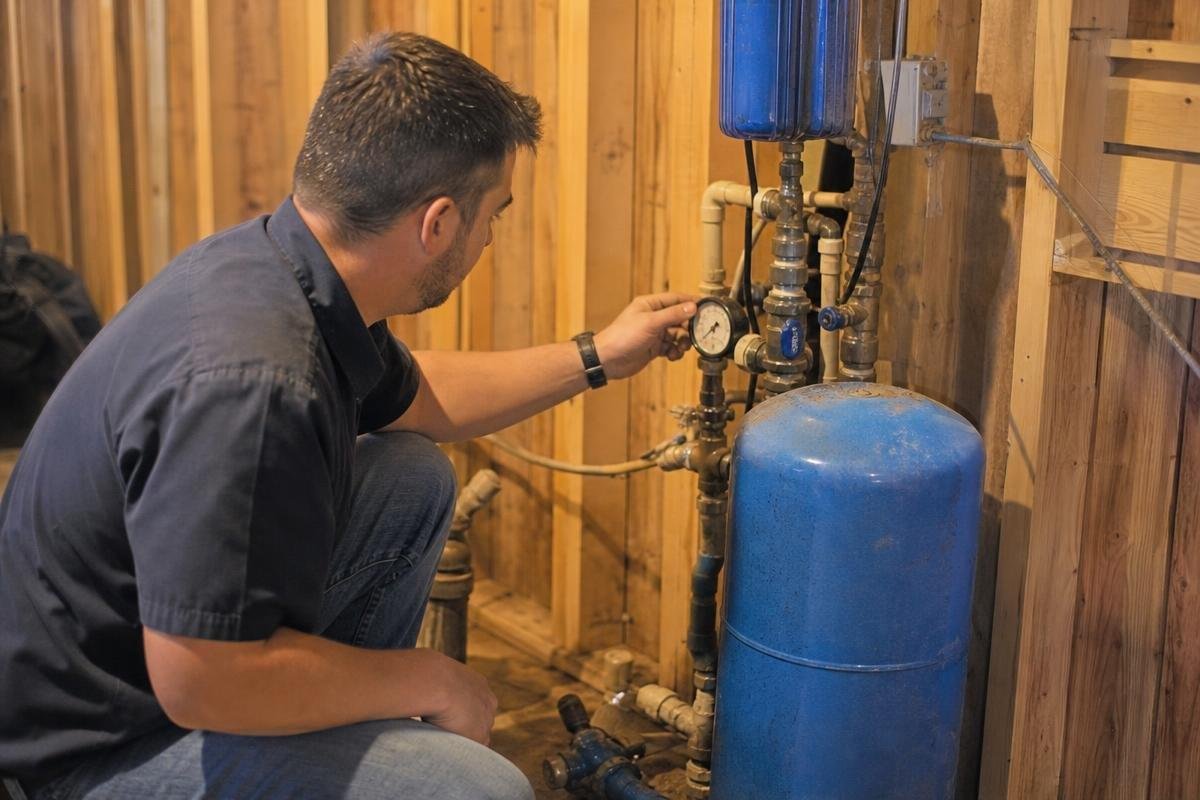
You may need well pump repair in Ukiah when your faucets sputter, the shower loses pressure, or water stops throughout the house. On private well properties in and around Ukiah, including rural areas such as Redwood Valley, these symptoms may involve the well pump, pressure tank, controls, a supply-line leak, or the well’s available water.…
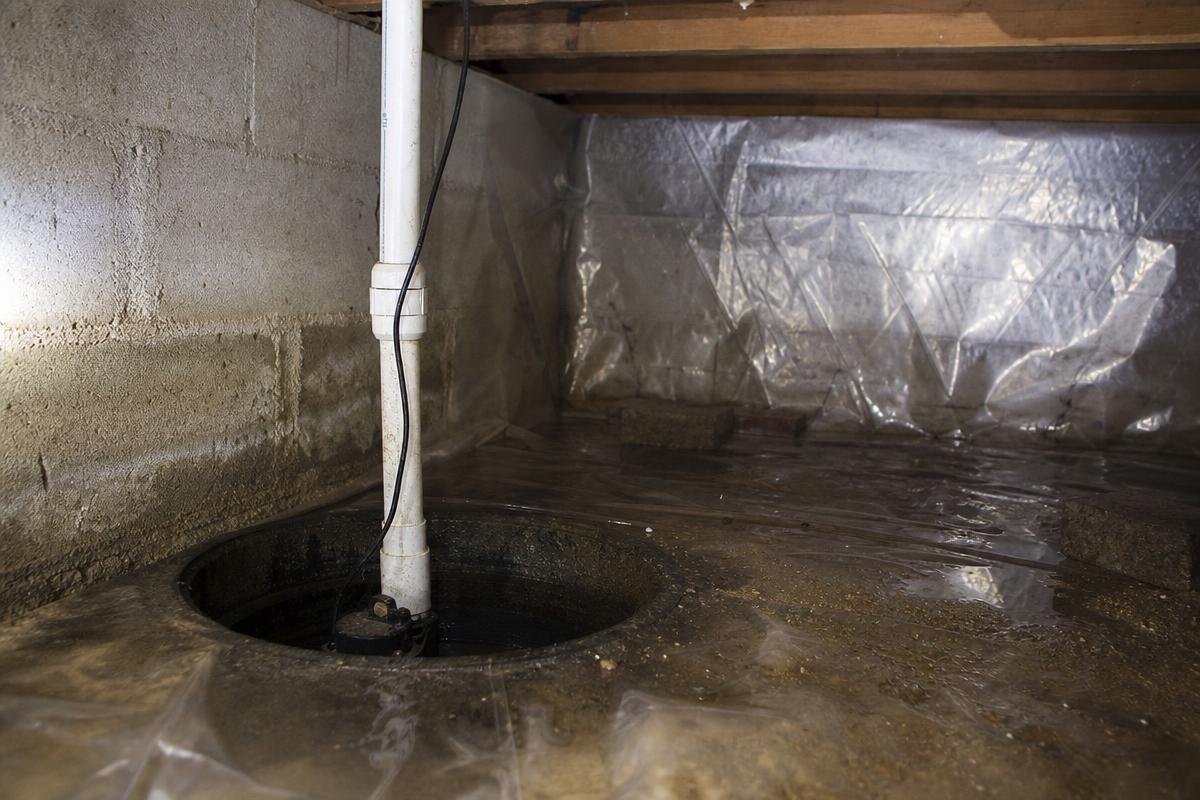
Water stains on a crawl-space wall, a damp smell after hard rain, or water collecting near the foundation can mean you need a sump pump. In Ukiah and nearby Mendocino County communities, winter storms, hillside runoff, valley-floor drainage patterns, irrigation, and downspouts that empty too close to the house can all contribute. AAA Organized Plumbing…
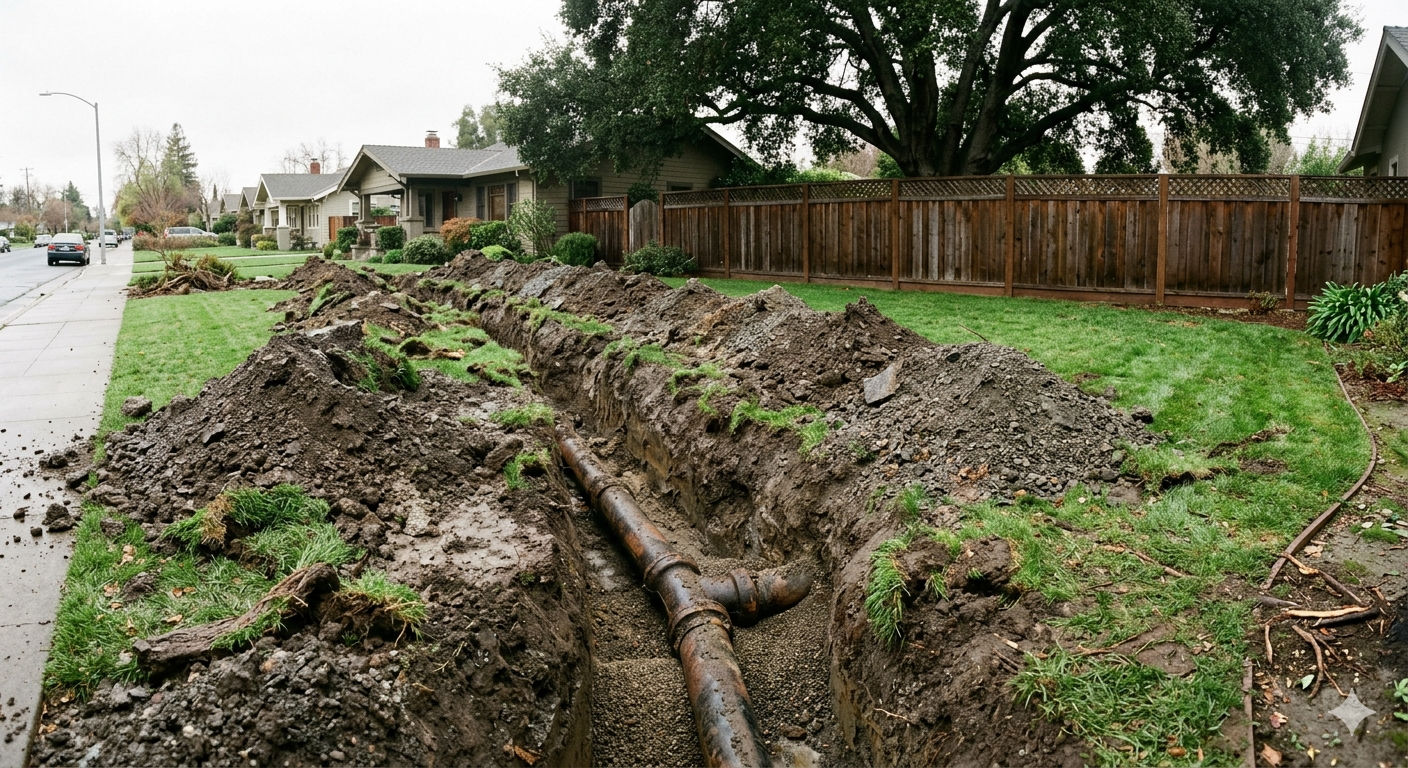
A failing sewer line forces a decision most homeowners are not prepared to make quickly. The pipe is underground, you cannot see it, and two very different repair approaches are on the table. One involves digging a trench across your yard. The other threads a solution through the existing pipe without disturbing the surface above…
