
Low water pressure in house plumbing turns simple chores into slow, frustrating tasks. The shower dribbles, the washing machine takes forever to fill, and rinsing dishes feels like a test of patience.
The good news is that weak pressure almost always has a findable cause. A clogged aerator may only need cleaning. Others point to aging pipes, a hidden leak, or a well system that needs attention. Knowing which one you are dealing with saves you time and keeps a small problem from becoming a big one. Tired of weak showers and slow faucets? Our Ukiah team can track down the cause and restore steady flow.
Before you buy parts or call anyone, take ten minutes to walk through your home. The pattern you find tells you more than any single symptom.
Turn on the cold water at the kitchen sink, then a bathroom sink, then the tub. Try the hot side at each one too. Flush a toilet and watch how fast the tank refills. Then step outside and open a hose bib.
When the kitchen faucet crawls but the bathroom sink runs strong, the problem lives at or near that kitchen faucet. That is good news. Single-fixture issues usually come down to a clogged aerator, a dirty cartridge, a kinked supply line, or a partly closed shutoff valve under the sink.
Strong cold water paired with a weak hot side points toward the water heater or the hot water lines. Sediment can collect in a tank heater, and the shutoff valve on the heater’s cold inlet may not be fully open. Older hot water lines can also corrode faster than cold lines.
When the whole house is sluggish, look at the system as a whole. The cause is usually somewhere between where water enters your property and where it branches off to individual rooms. That includes the main shutoff valve, a pressure reducing valve, the main supply line, and on rural properties, the well equipment.
| What You Notice | Likely Cause | Who Usually Handles It |
|---|---|---|
| One faucet or showerhead is weak | Clogged aerator or showerhead, worn cartridge | Homeowner first, plumber if it persists |
| Hot water weak, cold water fine | Water heater sediment, partly closed heater valve | Plumber |
| Whole house weak, came on suddenly | Main valve partly closed, failing PRV, leak, utility issue | Plumber or water utility |
| Whole house weak, faded over years | Corroded galvanized pipe, mineral scale | Plumber |
| Pressure surges and drops on a well | Pressure tank or pressure switch problem | Plumber with well experience |
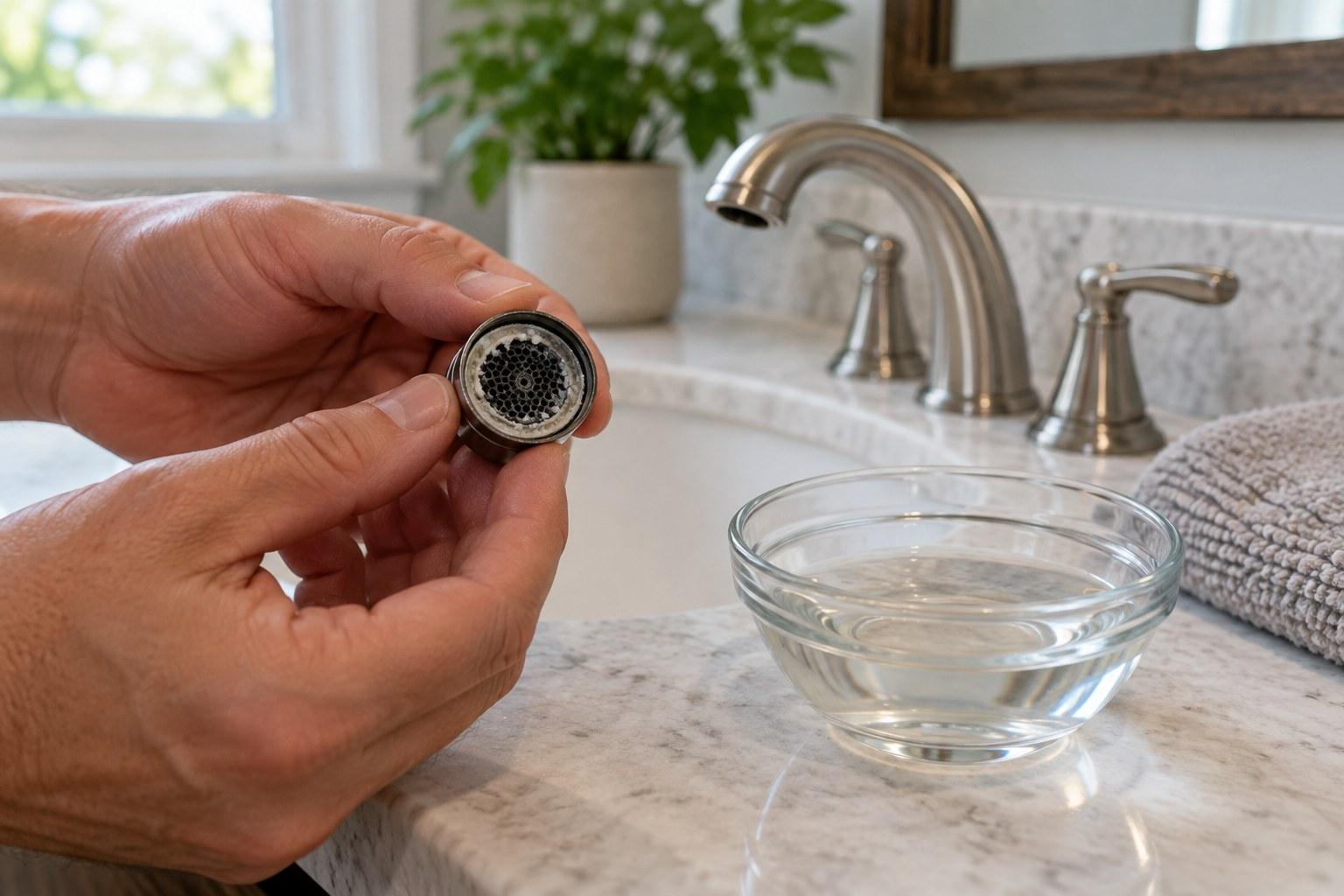
Many pressure complaints start and end at the fixture. These are the checks worth doing before you pick up the phone.
The aerator is the small screen threaded onto the tip of most faucets. It mixes air into the stream and keeps the flow smooth. Over time it collects grit, bits of old pipe, and mineral deposits. When enough builds up, the flow shrinks to a weak or sputtering stream.
To check it, close the drain so nothing falls in, then unscrew the aerator by hand or with a cloth-wrapped pair of pliers. Rinse the screen and soak it in white vinegar to loosen scale. Scrub gently with an old toothbrush, then reinstall. If the parts are cracked or the scale will not come off, a replacement aerator is inexpensive and easy to find.
Showerheads suffer the same fate as aerators. The tiny nozzles clog with scale, and the spray turns uneven or weak. Many showerheads can be removed and soaked in vinegar. If yours has rubber nozzles, you can often rub the deposits loose with your fingers.
Single-handle faucets use a cartridge to control flow and temperature. Debris can lodge inside it, and older cartridges wear out. Also check the small stop valves under the sink. They sometimes get bumped or partly closed during cleaning or a past repair. Turn each one fully open by hand, but do not force a valve that feels stuck, since old stops can crack or start leaking.
If cleaning the aerator and opening the stops does not help, our faucet repair and installation services can diagnose the cartridge, valve body, or supply lines and get your fixture flowing properly again.
When every fixture is weak, the problem is upstream. These are the most common system-level causes we see in Ukiah homes on city water.
This one surprises people. After a repair, a water heater replacement, or a utility visit, the main valve sometimes does not get opened all the way. An older gate valve can also wear internally so it never fully opens, even when the handle turns. If you are not sure where your main is located, our guide to finding and shutting off your main water valve walks you through the usual spots in Ukiah homes.
Some homes have a pressure reducing valve, often called a PRV, near where the main line enters the house. Its job is to lower incoming pressure to a level that is gentler on pipes and fixtures. Like any mechanical part, a PRV can wear out or clog. When it fails, it may choke pressure too far, or it may let pressure creep up and stress your plumbing.
Not every home has one, and adjusting or replacing a PRV is best left to a plumber who can test pressure before and after the work.
Sometimes the cause is not inside your property at all. The City of Ukiah draws drinking water from the Russian River and groundwater wells, according to the City of Ukiah Water Resources page. Maintenance on mains, a nearby line break, or flushing work can temporarily affect pressure in a neighborhood. If your neighbors are noticing the same thing at the same time, contact the city’s utility before calling a plumber.
When pressure has faded slowly over months or years, the pipes themselves are often to blame. These problems are harder to see, but they leave clues.
Galvanized steel supply pipe can corrode from the inside. Rust and deposits build up along the inner walls and narrow the opening water travels through. The outside of the pipe can look fine while the inside is badly restricted.
Signs that galvanized pipe is the culprit include:
Cleaning will not restore corroded galvanized pipe. Replacing it is the lasting fix, and our whole-home repiping services can replace old supply lines with modern piping that restores full flow.
Hard water carries dissolved minerals such as calcium and magnesium. As it moves through your plumbing, some of those minerals settle out as scale. Scale coats the inside of pipes, clogs valves, and crusts over aerators and showerheads. You might notice white spots on glasses, chalky buildup on faucets, or soap that never seems to lather well.
If those signs sound familiar, read our article on how Ukiah homeowners can spot and solve hard water problems. Addressing scale early protects your fixtures, your water heater, and your water pressure.
A leak anywhere in the supply line means some of your water is going somewhere other than your faucet. A large leak in a buried service line, under a slab, or in a crawlspace can noticeably lower pressure inside the home.
Watch for these warning signs:
The meter test is the simplest check. Turn off every fixture and appliance that uses water, note the meter reading or watch the leak indicator, and wait a short while without using any water. If the reading changes, water is escaping somewhere. Our article on how to find a water leak underground in Ukiah covers more detective steps you can take.
Once a leak is confirmed, professional leak detection and repair finds the exact spot and fixes it with as little digging or wall damage as possible. Suspect a leak or old pipes behind your weak water pressure? Let our team find the cause before it gets worse.
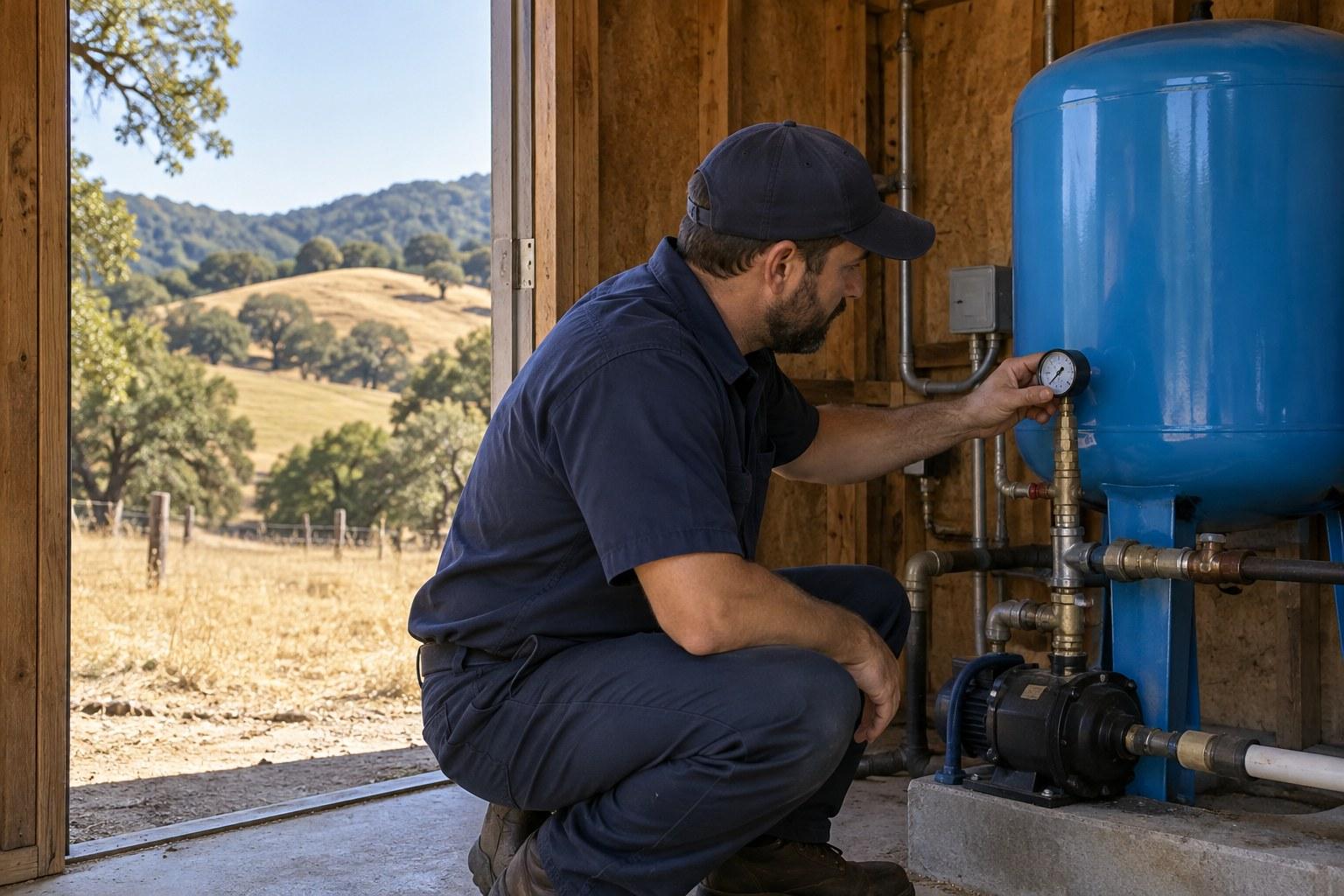
Homes supplied by private wells use their own pressure systems, so the causes of weak flow can differ.
A typical well system uses a pump, a pressure tank, and a pressure switch. When you open a faucet, pressure in the tank drops. Once it falls to a set low point, called the cut-in pressure, the switch turns the pump on. The pump refills the tank until pressure reaches the cut-out point, and the switch turns the pump off. The tank holds a cushion of air that pushes water out to your fixtures between pump cycles.
If the air charge in the tank is lost, or the internal bladder fails, the tank cannot store pressure properly. The result is often short cycling, where the pump clicks on and off rapidly, along with pressure that surges and fades while you shower. Short cycling also wears out the pump faster.
The pressure switch has electrical contacts and a small tube that senses pressure. Contacts can pit or burn, and the sensing tube can clog with sediment. A failing switch may start the pump late, shut it off early, or not start it at all. Because the switch involves line voltage, homeowners should not open it or try to clean the contacts.
Weak pressure can also come from the pump itself or from the well. A worn pump may not keep up with demand, and sediment can clog screens and filters. During dry stretches, some wells produce less water than usual. Our article on signs your well pump is failing explains what to watch for.
A safe homeowner check is to look at the pressure gauge near your tank while someone runs water inside. Note where the pump turns on and off. If the needle swings wildly or the pump runs constantly, it is time for professional well and pump services to test the tank, switch, and pump.
Cleaning aerators and checking valves are fair game for homeowners. Beyond that, a plumber can test pressure accurately, find hidden problems, and make repairs safely. Call for help when you notice any of the following:
If water is actively spraying or pooling, shut off the main valve first, then call AAA Organized Plumbing at (707) 621-8282.
A professional visit usually starts with a pressure gauge on a hose bib to measure incoming pressure. From there, a plumber checks the main valve, the PRV if present, the water heater, visible pipe material, and the meter for signs of leaks. On wells, the tank air charge, the switch, and the pump get tested too. That process turns guesswork into a clear diagnosis and a repair plan you can trust.
When just one faucet is weak, the cause is almost always at that fixture. A clogged aerator is the most common culprit, followed by a dirty or worn cartridge and a partly closed stop valve under the sink. Remove and clean the aerator first. If flow is still weak after cleaning and opening the stops, the cartridge or supply line likely needs a closer look from a plumber.
Yes. Hard water carries minerals that settle out as scale inside pipes, valves, aerators, and showerheads. Over time that buildup narrows the path water travels and lowers flow. The change is usually gradual, which is why many homeowners do not notice until pressure is clearly weak. Cleaning fixtures helps at the tap, while water treatment can slow new buildup throughout the home.
Turn off every fixture and appliance that uses water, then watch your water meter or its leak indicator for a short time. If it moves, water is escaping somewhere. Other clues include a rising water bill, the sound of running water with everything off, damp or extra green patches of yard, and warm spots on floors. A plumber can pinpoint the exact location.
If testing shows corroded galvanized pipe is restricting flow, replacement is the lasting fix. Galvanized steel corrodes from the inside, and that buildup cannot be reliably cleaned out. Rusty water, pinhole leaks, and pressure that has faded over years all point in this direction. A plumber can inspect your pipes and explain whether partial replacement or whole-home repiping makes the most sense.
Pressure that surges and fades on a well system often points to the pressure tank. If the tank loses its air charge or its bladder fails, it cannot hold pressure between pump cycles, and the pump short cycles. A failing pressure switch or a worn pump can cause similar symptoms. Because these parts involve electrical connections, have a plumber with well experience test them.
Yes. A pressure reducing valve has internal springs and diaphragms that wear out or clog with debris over time. A failing PRV may restrict pressure too much, leaving every fixture weak, or let pressure climb too high and stress your plumbing. Not every home has one. A plumber can confirm whether yours does, test it with a gauge, and adjust or replace it.
Weak water pressure is more than an annoyance. It is often your plumbing system telling you something needs attention. Whether the cause is a crusty aerator or a corroded main line, finding the source of low water pressure in house plumbing early keeps repairs smaller and your home running smoothly.
Our team helps Ukiah homeowners track down weak water pressure and fix the cause, from faucets and valves to pipes and well systems. Call us at (707) 621-8282, visit our office at 1252 Airport Park Blvd STE A4, Ukiah, CA 95482, or reach out online to schedule a visit.
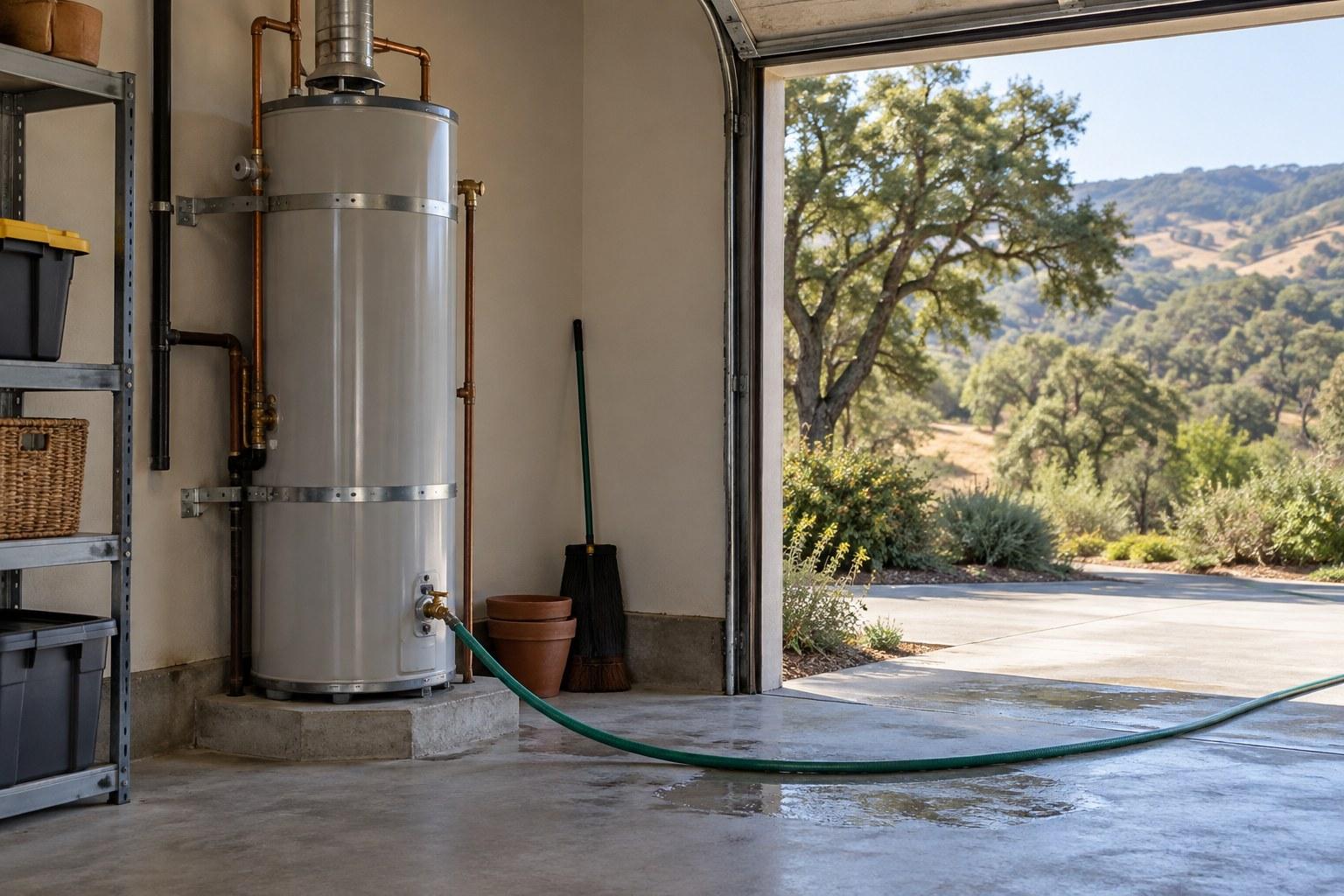
If your tank has started popping, rumbling, or running out of hot water sooner than it used to, learning how to flush a water heater is one of the most useful maintenance skills you can pick up. Minerals in the water settle at the bottom of the tank over time, and that layer of sediment…
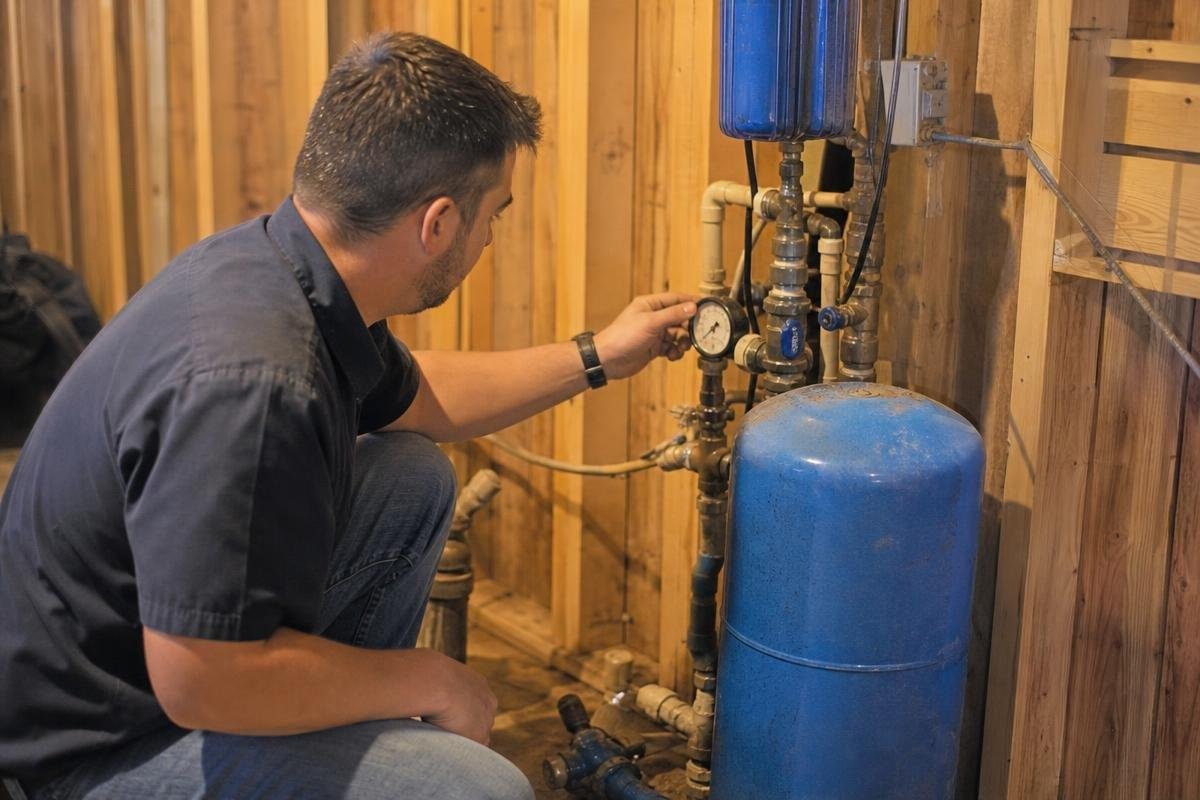
You may need well pump repair in Ukiah when your faucets sputter, the shower loses pressure, or water stops throughout the house. On private well properties in and around Ukiah, including rural areas such as Redwood Valley, these symptoms may involve the well pump, pressure tank, controls, a supply-line leak, or the well’s available water.…
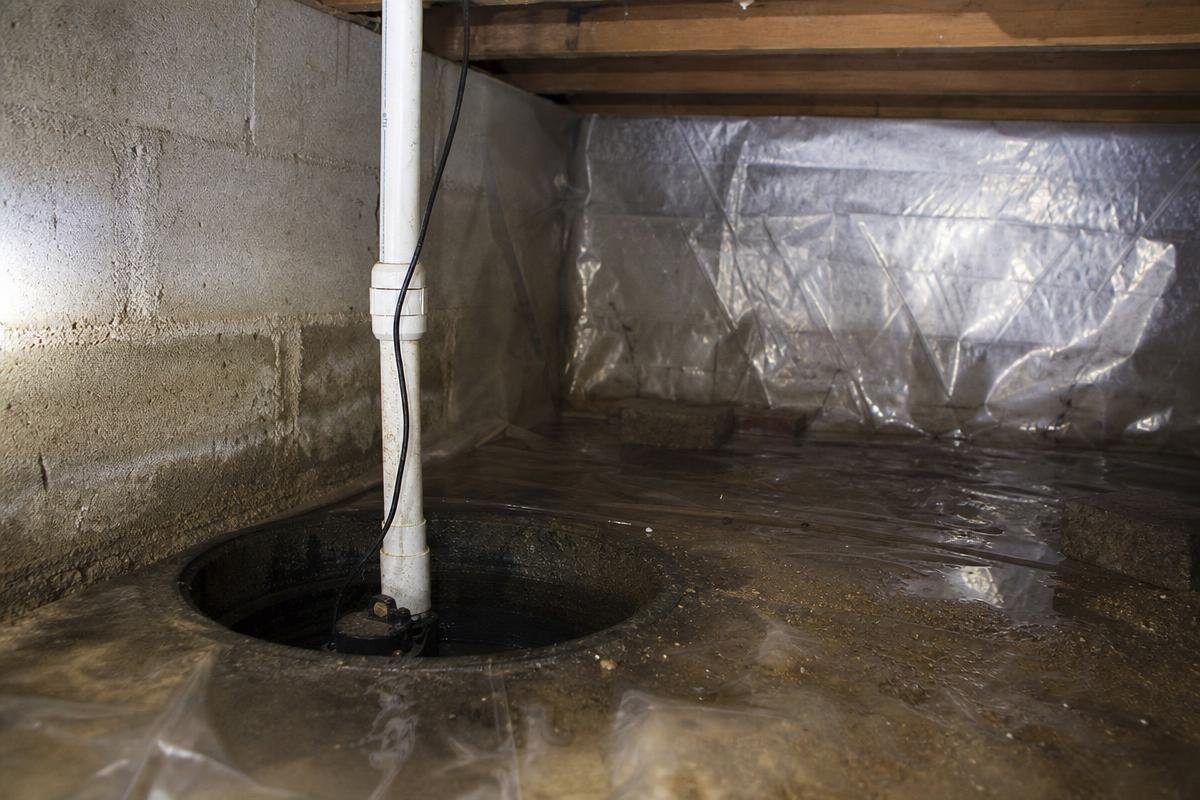
Water stains on a crawl-space wall, a damp smell after hard rain, or water collecting near the foundation can mean you need a sump pump. In Ukiah and nearby Mendocino County communities, winter storms, hillside runoff, valley-floor drainage patterns, irrigation, and downspouts that empty too close to the house can all contribute. AAA Organized Plumbing…
