Annual Plumbing Maintenance Checklist for Sonoma & Napa County Homes
September 14, 2026
Plumbing problems rarely announce themselves in advance. A pipe that has been corroding for two years does not send a warning before it fails. A sewer line being slowly overtaken by tree roots gives no clear signal until the day three drains back up at once. A water heater running on a thick layer of sediment just quietly costs you more on your gas bill every month until the tank finally gives out.
The most reliable way to avoid those scenarios is a once-a-year walkthrough of every plumbing system in your home. For Sonoma and Napa County homeowners specifically, that walkthrough carries a few local considerations worth keeping in mind. Hard water from the region’s mineral-rich soils accelerates scale buildup in pipes and appliances. A significant portion of the area’s housing stock predates 1980, meaning galvanized steel supply lines may still be in service. Mature trees, common throughout wine country properties, send roots toward buried sewer laterals. Seismic activity stresses underground joints and connections over time. And the Mediterranean climate, with its wet winters and dry summers, creates seasonal pressure on irrigation lines, outdoor fixtures, and sewer systems that see a surge in storm runoff.
Work through this checklist once a year. The best time is early fall, before the wet season arrives and before you need your heating system and water heater running at full capacity.
Key Takeaways
Sonoma and Napa County homes face specific plumbing risk factors: hard water from mineral-rich soils, aging galvanized infrastructure in pre-1980s homes, mature tree root systems near sewer laterals, and seismic activity that stresses underground joints over time.
The water heater deserves the most consistent attention; annual flushing, a TPR valve test, and anode rod inspection protect the unit from the sediment accumulation and corrosion that hard water accelerates.
Multiple slow drains across different areas of the home point to a main sewer lateral problem, not individual fixture clogs, and should be investigated with a camera inspection rather than repeated snaking.
Exercising shutoff valves annually, including the main shutoff and each individual fixture valve, prevents them from seizing at the moment you need to close them quickly.
Water pressure should fall between 40 and 60 PSI; readings above 80 PSI put sustained stress on every fitting, connection, and appliance in the system and should be corrected at the pressure regulator.
A professional inspection is worth scheduling now if your home predates 1980, has never had a sewer camera inspection, experienced nearby seismic activity recently, or has an irrigation backflow preventer that has not been tested this year.
Water Heater
The water heater is where annual maintenance pays the most consistent dividends. Sediment from hard water accumulates at the bottom of the tank every year, insulating the heating element and forcing the unit to consume more energy to produce the same amount of hot water. Left unaddressed, that sediment compresses into a solid layer that shortens the lifespan of the unit significantly.
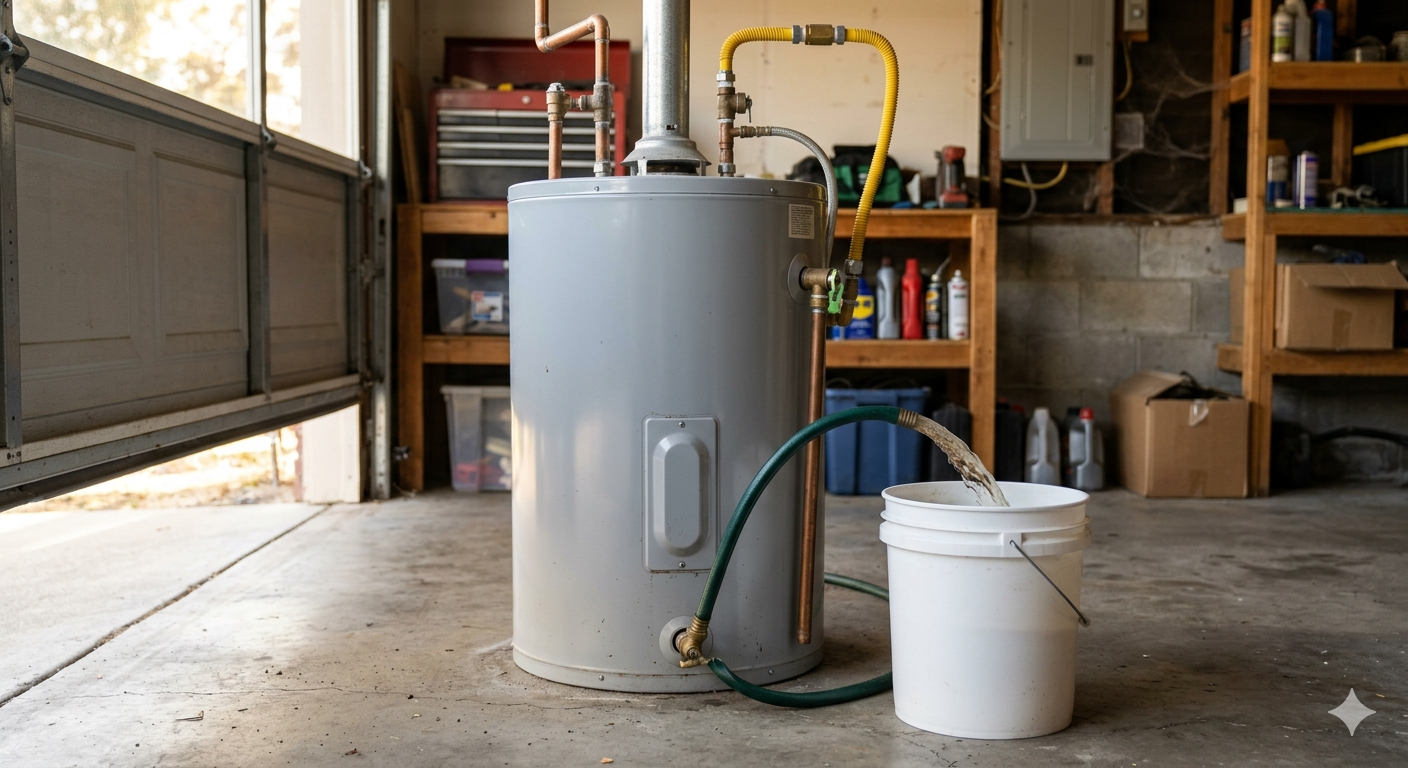
Flush the tank. Turn off the power or gas supply to the unit, connect a garden hose to the drain valve at the base of the tank, and drain several gallons into a safe drainage area until the water runs clear of sediment. If the water heater has never been flushed and has been in service for more than two or three years, the flush may require patience as dense sediment clears. If you are unsure how to do this safely, our water heater services team can handle the flush as part of a full service visit.
Test the pressure relief valve. The TPR valve is a safety device that releases pressure if the tank overheats. Lift the lever briefly and confirm that water flows and then stops cleanly when you release it. If the valve drips after the test or fails to release, it needs replacement.
Inspect the anode rod. The sacrificial anode rod attracts corrosion to itself to protect the tank lining. It depletes over time and should be inspected every few years, more frequently in hard water areas like Sonoma and Napa Counties. A rod that is heavily corroded or has worn down significantly should be replaced before the tank itself begins to corrode.
Check for visible warning signs. Rust-colored water from the hot tap, rumbling or popping sounds during heating cycles, moisture around the base of the unit, and corrosion on the supply line connections all warrant a professional assessment. A water heater showing these symptoms alongside age of ten or more years is a candidate for replacement rather than repair.
Drains and Sewer Lines
Drain performance is one of the easiest things to observe and one of the most frequently ignored until a problem becomes serious.
Run every fixture. Fill each sink, shower, and tub, then watch how quickly it empties. A single slow drain in one bathroom is usually a localized clog. Multiple slow drains across different areas of the house point to accumulation in the main sewer lateral, not individual fixture lines. That distinction matters because it determines whether the solution is a drain snake at one fixture or a full sewer line cleaning.
Listen for gurgling. Gurgling sounds from a toilet when you run a nearby sink, or from a floor drain when you flush, indicate that air is being forced through a partial blockage somewhere in the drain system. That sound is a reliable early warning of a developing sewer line problem.
Consider your trees. Wine country properties in Sonoma and Napa Counties commonly feature mature oaks, ornamental trees, and established landscaping whose root systems extend well beyond the visible canopy. Roots are drawn to the moisture and nutrients inside sewer laterals and enter through small cracks or deteriorating joints in older clay or cast iron lines. If your home has large trees within 20 to 30 feet of the sewer line and you have never had a camera inspection, scheduling one is worthwhile. Our drain cleaning service can clear developing blockages, and our hydro jetting service removes the pipe wall accumulation that snaking alone leaves behind.
Toilets
A toilet that appears to be working normally can be silently wasting hundreds of gallons of water per month through a failed flapper or fill valve.
Perform the dye test. Add several drops of food coloring to the toilet tank and wait ten minutes without flushing.If color appears in the bowl, the flapper is not seating properly and water is leaking from the tank into the bowl continuously. This is one of the most common and costliest silent plumbing leaks in a home.
Observe the fill cycle. After flushing, the tank should fill within 60 to 90 seconds and then stop completely. A toilet that runs for longer than two minutes, or that cycles on briefly even when no one has used it, has a fill valve or flapper that needs attention.
Check for physical stability. Grip the toilet bowl and attempt to move it side to side. There should be no movement at all. A toilet that rocks even slightly may have a compromised wax ring seal beneath it, which can allow sewer gases and moisture to escape at the floor level. Check the caulk line around the base for cracks or separation as a related sign.
Exercise the shutoff valve. The oval shutoff valve behind and below the toilet should turn off completely when closed. Turn it clockwise until it stops, then back counterclockwise to the open position. A valve that is seized, corroded, or fails to stop the flow when closed needs replacement, ideally before you need it in an emergency. Our toilet services cover flapper replacement, fill valve repair, wax ring replacement, and shutoff valve replacement.
Faucets, Showerheads, and Aerators
Hard water is the defining water quality challenge for Sonoma and Napa County homes. The mineral-rich municipal and well water in this region deposits calcium and magnesium scale on every surface it contacts, and nowhere is that more visible than at faucets, showerheads, and aerator screens.
Clean aerators. Unscrew the aerator from each faucet, which is the small screen at the tip of the spout. Soak it in white vinegar for 30 minutes to dissolve mineral deposits, then rinse and reinstall. A clogged aerator reduces flow noticeably and is often misread as low water pressure throughout the home.
Clean or replace showerheads. Remove the showerhead and soak it in vinegar to dissolve scale from the spray holes. If the showerhead is more than several years old and the spray pattern remains uneven after cleaning, replacement is more practical than continued maintenance.
Inspect flexible supply lines. Under every sink and behind every toilet, a braided flexible supply line connects the shutoff valve to the fixture. These lines have a finite service life of roughly five to ten years and can develop bulges, cracks, or corrosion at the fittings. A failed supply line can release a significant amount of water quickly into a cabinet. Look for any sign of dampness, staining inside the cabinet, or visible wear on the line itself.
Check for dripping faucets. A single dripping faucet, even a slow one, wastes a meaningful amount of water over the course of a year and indicates a worn washer or cartridge that needs replacement. Our faucet services cover cartridge replacement and faucet installation for all fixture types.
Pipes and Visible Plumbing
Most of your home’s pipes are out of sight, but a meaningful portion are accessible for inspection if you know where to look.
Check under every sink. Open the cabinet doors beneath kitchen and bathroom sinks and examine the drain connections, supply lines, and the interior of the cabinet for any moisture, staining, mold, or mineral deposits. Soft spots in the cabinet floor are a sign that water has been leaking there for some time without being noticed.
Inspect crawl spaces and utility rooms. If your home has a crawl space, the supply and drain lines running through it should be checked for corrosion, moisture, and physical damage. Homes throughout Santa Rosa, Healdsburg, and the broader wine country region that were built before the 1980s may still have galvanized steel supply lines in these areas. Galvanized pipe that shows significant rust, narrowing from internal scale, or active pinhole leaks is past the point where spot repairs are the most practical solution. Our repiping team can assess whether a section or the full supply system needs replacement.
Verify pipe insulation. Exposed pipes in unheated spaces, including under the home, in garages, and in exterior wall cavities, should have adequate insulation. Sonoma and Napa County winters are mild by most standards, but inland valleys, hillside properties, and areas at elevation do experience hard freezes in cold years. Foam pipe sleeves are inexpensive and straightforward to install on accessible runs.
Outdoor Plumbing
Outdoor plumbing takes more seasonal stress than any other part of the system and receives the least regular attention from most homeowners.
Test every hose bib. Turn on each outdoor faucet fully and confirm that water flows strongly and shuts off completely without dripping. A hose bib that drips after closing, or that has visible corrosion at the body, should be repaired or replaced before the wet season.
Check irrigation backflow preventers. Properties throughout Sonoma and Napa Counties with irrigation systems are required to have backflow prevention devices installed on irrigation connections, and those devices require annual testing as mandated by local water districts. If your property has an irrigation system and you have not had the backflow preventer tested this year, schedule that test now. A failed or untested backflow preventer is a compliance issue as well as a water quality risk.
Inspect for dead vegetation above buried lines. A patch of dead or dying grass or plants in an otherwise healthy lawn, particularly along a straight line running from the house toward the street, can indicate a slow leak from a buried supply or sewer line below. Our leak repair team uses detection equipment to locate underground leaks without excavation.
Drain and disconnect hoses before cold nights. Water left in a garden hose connected to an outdoor faucet can freeze, expand back through the hose bib, and damage the valve inside the wall. Disconnect hoses before the first forecasted freeze each fall.
Water Pressure Check
Water pressure that is too low is frustrating. Water pressure that is too high is genuinely damaging to pipes, fittings, and appliances over time, and it is one of the more commonly overlooked contributors to premature plumbing wear.
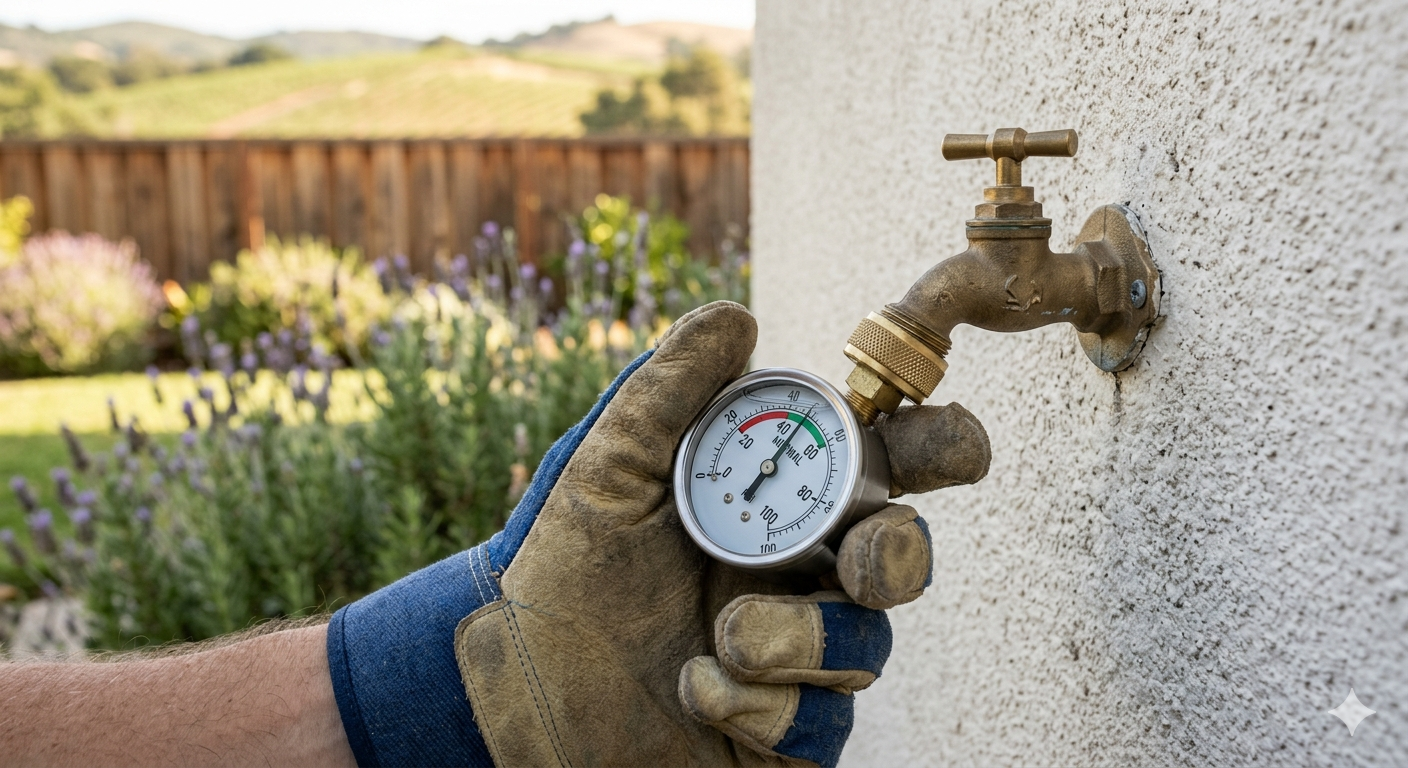
The recommended range for residential water pressure is 40 to 60 PSI. An inexpensive pressure gauge, available at any hardware store, attaches to an outdoor hose bib. Turn the water on fully with nothing else running in the home and read the gauge.
Readings below 40 PSI suggest a supply issue, a pressure regulator that has drifted, or significant scale accumulation inside supply pipes. Readings above 80 PSI are putting sustained stress on every connection, fitting, and appliance in the system. The pressure regulator, typically located where the main supply line enters the home near the meter, can be adjusted by a licensed plumber to bring pressure into the safe range.
If you have hard water and have not had a water treatment system installed, the scale accumulation inside supply lines may be contributing to pressure loss. A professional assessment can determine whether the issue is at the regulator or inside the pipes themselves.
Shutoff Valves
Knowing where your shutoff valves are and confirming they work is one of the most practical things you can do as a homeowner. A valve that has been sitting open in the same position for years will often seize when you try to close it in an emergency, exactly when you need it most.
Exercise the main shutoff. The main water shutoff valve is typically located where the supply line enters the home, either near the front of the house, in a utility room, or at the meter. Turn it off completely, then back on. It should operate smoothly in both directions.
Exercise individual fixture valves. Every toilet, sink, dishwasher, washing machine, and water heater has a dedicated shutoff valve. Work through each one annually, turning it off and back on. Any valve that is stiff, corroded, fails to stop flow completely when closed, or drips at the packing nut when operated should be replaced.
Label your main shutoff. If you have not already done so, label the main shutoff valve clearly so that any household member, a house sitter, or a plumber arriving in an emergency can locate it immediately without a search.
When to Schedule a Professional Inspection
A homeowner walkthrough catches a great deal. A licensed plumber catches more, because professional inspections involve diagnostic equipment, pressure testing, and access to components that are not visible from a surface check.
Schedule a professional plumbing inspection this year if any of the following apply to your property:
Your home was built before 1980 and has never been repiped or had its sewer line camera inspected. The original galvanized steel supply lines and clay sewer laterals from that era are operating well past their designed service life in many wine country homes.
Your area experienced a significant earthquake in the past year. Ground movement in Sonoma and Napa Counties is frequent enough that underground joints and connections in older systems deserve verification after notable seismic events.
Your home has irrigation and you have not had the backflow preventer tested this year. Local water district requirements are not optional, and the compliance deadline matters.
You have noticed any of the following since your last inspection: an unexplained increase in your water bill, water staining on ceilings or walls, a persistent drain odor, or a water heater that is making new noises.
A Napa plumber or a plumber serving Santa Rosa or Healdsburg familiar with local housing stock and water conditions can complete a thorough inspection in one to two hours and give you a clear picture of where your system stands.
Frequently Asked Questions
How long does a homeowner walkthrough of this checklist take?
A careful walkthrough of the items on this list, working through each room methodically, typically takes two to three hours for a standard single-family home. You do not need special tools for most of it, though a pressure gauge for the water pressure check and food coloring for the toilet dye test are worth having on hand. The water heater flush takes additional time depending on sediment level.
Can I do all of this myself or do I need a plumber for any of it?
Most of the visual inspection items, the dye test, aerator cleaning, valve exercising, and pressure check are reasonable homeowner tasks. The water heater flush and TPR valve test involve hot water and gas or electrical systems and are safer when handled by a professional if you are not already familiar with the procedure. Camera inspection of the sewer line, pressure testing of supply lines, and any repair work that emerges from the inspection should be handled by a licensed plumber.
How do I know if my home has hard water?
The visual signs are usually apparent before any testing: white or yellowish mineral deposits around faucet bases and inside the toilet bowl, cloudy or spotted dishes coming out of the dishwasher, and showerhead spray holes that clog repeatedly. For a precise reading, a water hardness test strip from a hardware store gives a rough GPG number, and a professional water test provides a full mineral profile. Our water treatment team can assess your water and recommend the right treatment approach for your home’s specific supply.
My home is relatively new. Do I still need annual maintenance?
Yes, though the specific concerns shift. Newer homes are unlikely to have galvanized supply lines or clay sewer laterals, but they still accumulate water heater sediment, develop mineral scale on fixtures, experience flapper and fill valve wear in toilets, and can develop supply line fatigue beneath sinks. A new home in an area with hard water will show the same scale buildup on faucets and aerators as an older one. The maintenance rhythm is the same; only some of the failure modes are different.
What should I do if I find something during the walkthrough?
Minor issues like a dripping faucet, a running toilet, or a clogged aerator can often be addressed immediately or scheduled within a few weeks. Anything involving active water under a cabinet, visible corrosion on a supply line, a water heater showing multiple warning signs, or a pressure reading significantly outside the 40 to 60 PSI range warrants a prompt call to a licensed plumber rather than a wait-and-see approach. Our leak repair and emergency plumbing teams are available when something discovered during a routine check turns out to need immediate attention.
How often should the sewer line be professionally inspected in wine country?
For properties with mature trees within 30 feet of the sewer lateral, every three to five years is a reasonable interval for a camera inspection even if no symptoms have appeared. For properties with older clay or cast iron sewer lines and no recent inspection on record, a baseline camera inspection is worth doing now regardless of how drains are currently performing. The cost of a camera inspection is a fraction of what emergency sewer line repair or replacement costs after a collapse or backup.
Schedule Your Annual Plumbing Inspection
If working through this checklist has surfaced questions or concerns, or if your home is overdue for a professional assessment of its plumbing systems, our team is ready to help. We serve homeowners throughout Sonoma and Napa Counties with thorough inspections, honest recommendations, and reliable repairs.
Contact AAA Organized Plumbing to schedule your annual plumbing inspection or discuss any item from this checklist with a licensed plumber.
About AAA Organized Plumbing
AAA Organized Plumbing is a licensed plumbing contractor serving communities throughout Sonoma and Napa Counties and the broader North Bay region, including Santa Rosa, Healdsburg, Napa, and the surrounding wine country communities. From annual maintenance inspections and water heater service to sewer line camera inspections and full system repiping, the team brings local expertise and honest recommendations to every job. When you need a plumber who understands the specific conditions that affect homes in this region, AAA Organized Plumbing is the team to call.
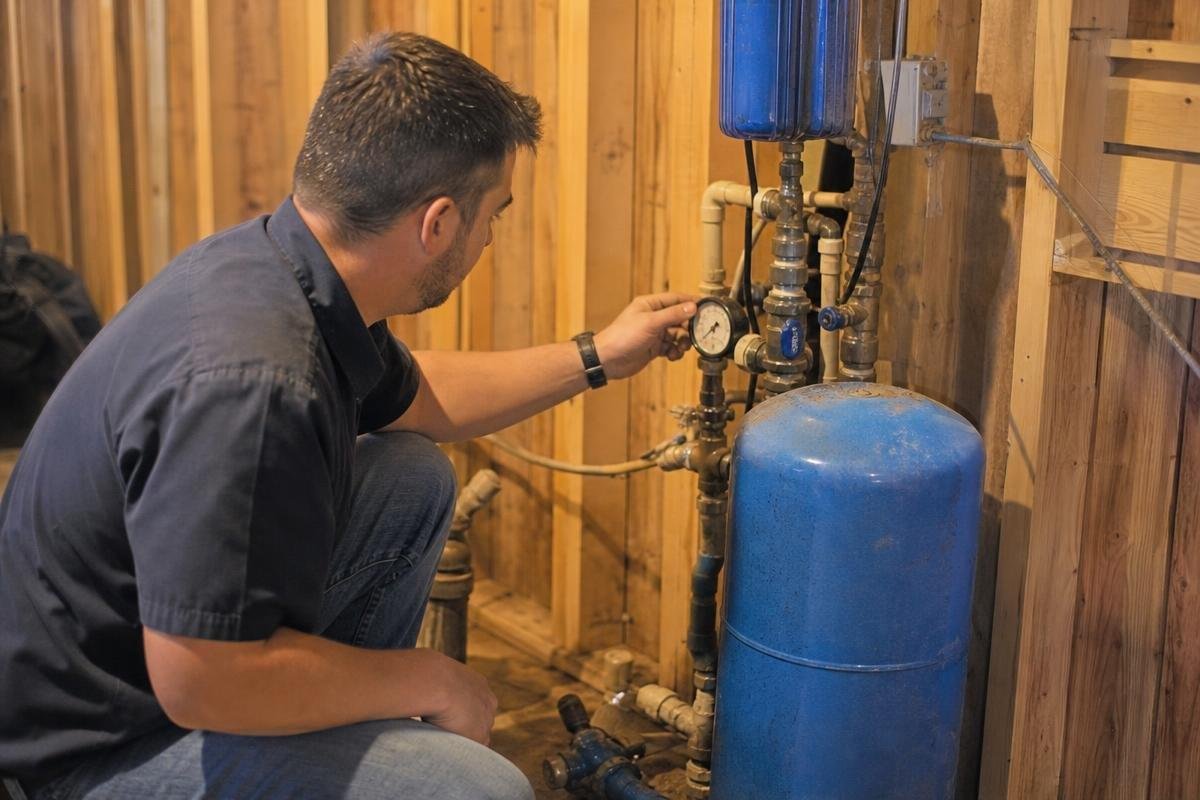
You may need well pump repair in Ukiah when your faucets sputter, the shower loses pressure, or water stops throughout the house. On private well properties in and around Ukiah, including rural areas such as Redwood Valley, these symptoms may involve the well pump, pressure tank, controls, a supply-line leak, or the well’s available water.…
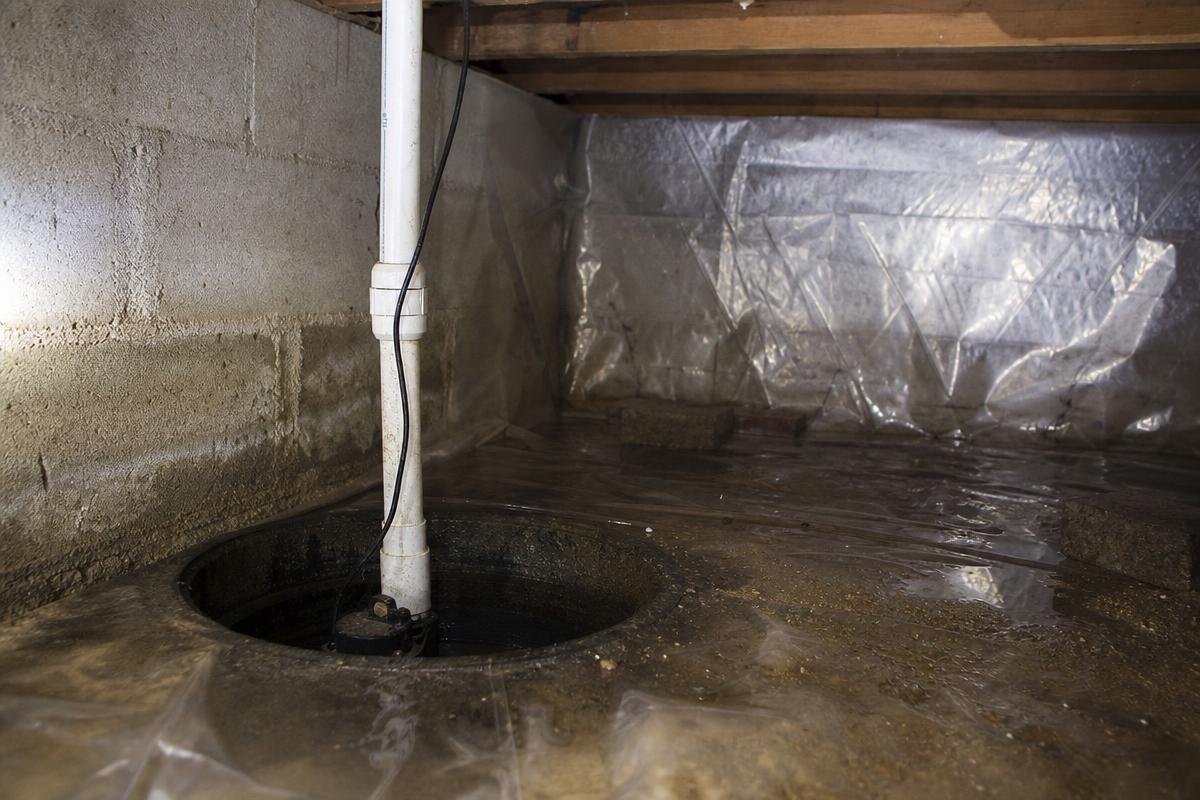
Water stains on a crawl-space wall, a damp smell after hard rain, or water collecting near the foundation can mean you need a sump pump. In Ukiah and nearby Mendocino County communities, winter storms, hillside runoff, valley-floor drainage patterns, irrigation, and downspouts that empty too close to the house can all contribute. AAA Organized Plumbing…
A failing sewer line forces a decision most homeowners are not prepared to make quickly. The pipe is underground, you cannot see it, and two very different repair approaches are on the table. One involves digging a trench across your yard. The other threads a solution through the existing pipe without disturbing the surface above…