
A dripping faucet at 2 a.m. A toilet that won’t stop running. A drain that backs up every time it rains. These are some of the most common plumbing problems Ukiah homeowners deal with, and many of them trace back to the same root causes: aging galvanized pipes in homes built between 1940 and 1975, hard water from the Russian River basin, and crawl spaces that see real freeze temperatures every winter.
AAA Organized Plumbing is a licensed Ukiah plumber serving homes across Mendocino County from our shop at 1252 Airport Park Blvd STE A4, and this guide covers what is actually happening, and what to do about it. If you want the chemistry behind the biggest local culprit, our breakdown of how hard water in Mendocino County damages your pipes over time is worth a read. Got a plumbing problem you can’t figure out? We can help you sort it out fast.
The drain that takes five full minutes to clear after a shower. The white mineral crust ringing the base of your kitchen faucet. The toilet that runs quietly all night, every night. These are not minor annoyances. Each one is a signal that something is failing inside your plumbing system.
Homes in Calpella, Talmage, Hopland, and Redwood Valley share three stressors that most national plumbing guides ignore: groundwater hardness between 150 and 300+ mg/L that scales pipes from the inside out, a housing stock heavily concentrated in the 1940 to 1975 build era with galvanized steel and clay sewer lines, and seasonal temperature swings that push crawl space pipes to their limits every winter.
Ignore those stressors long enough and small symptoms turn into costly repairs. This guide walks you through the 8 most common plumbing problems we see in Mendocino County homes, what causes each one, and honest advice on what you can fix yourself versus when to call us.
Your kitchen sink drains slower every week. Your shower puddles around your feet before you finish rinsing. These are a predictable result of what moves through your pipes every day, and in homes along the Low Gap Road corridor, the problem often compounds faster than homeowners expect.
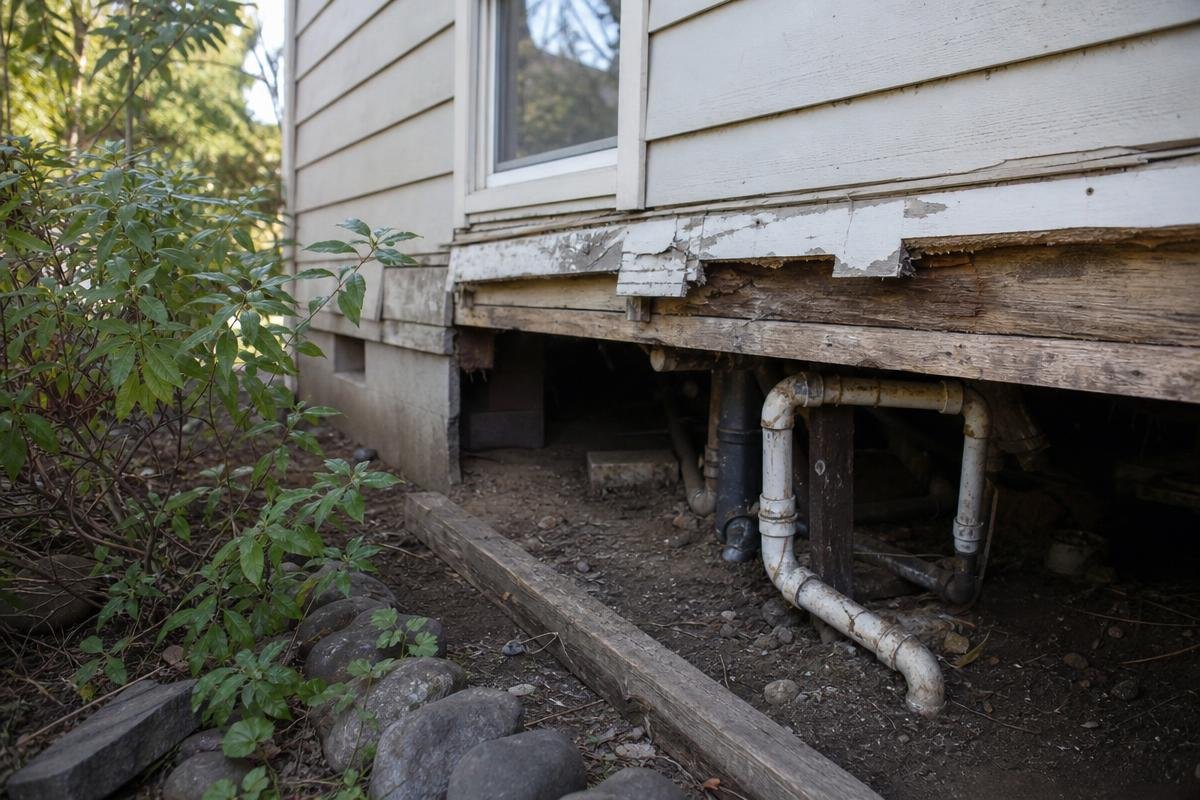
Slow drains in Ukiah homes are most commonly caused by FOG buildup, hair and soap scum, or mineral scale from hard water. Knowing which one you have changes what you should do next.
Cause 1: FOG buildup. Fats, oils, and grease cool and solidify inside kitchen drain lines. Each pour adds another layer, and over time the pipe bore narrows until water barely moves.
Cause 2: Hair and soap scum. In bathroom drains, hair binds with soap residue inside the P-trap and drain cover. It catches everything else that passes through.
Cause 3: Mineral scale. That same hard water deposits calcium carbonate on pipe walls year after year. In older homes with original galvanized steel drain lines, scale builds compressively over decades. Galvanized steel corrodes and roughens internally, so scale grips the walls instead of washing through, while PVC stays smooth and resists it. If your home was built before 1975, those galvanized lines are a real factor.
For a single slow fixture, start with a cup plunger. For mild kitchen grease, pour baking soda down the drain followed by near-boiling water. Do not use chemical drain cleaners like Drano in older homes. Those caustic formulas soften PVC joints and accelerate corrosion in galvanized lines. The short-term clear is not worth the long-term damage. If you have a slow shower drain, our guide on how to unclog a shower drain walks through the steps.
If two or more drains are slow at the same time, that is not a fixture-level clog. That is a main sewer line problem, and no plunger or home remedy touches a main line blockage. Our drain cleaning includes cable snaking for standard clogs and hydro jetting services for FOG and mineral scale a snake cannot fully clear. Hydro jetting can help remove accumulated buildup, depending on the pipe condition and the source of the blockage.
Dealing with a slow drain that keeps coming back? We offer hydro jetting service in Ukiah.
You hear it at night. A slow, rhythmic drip from the kitchen or bathroom. Most homeowners ignore it for weeks. That drip is actually useful information: something inside the faucet has worn out, and the clock is running on how much it costs you.
Leaky faucets in the inland valley usually fail because of thermal cycling and mineral scale. Summer highs push past 100°F while winter overnight lows in Potter Valley and the surrounding hills regularly drop into the mid-20s. That range cycles rubber washers, O-rings, and compression fittings through repeated expansion and contraction, so they fatigue faster here than in coastal communities like Fort Bragg or Mendocino.
Scale makes it worse. Mineral deposits coat the ceramic disc or rubber seat inside ball and cartridge faucets, grinding them down with every use until they no longer seal.
A faucet dripping once per second wastes roughly 3,000 gallons per year, and that shows up on your water bill. A weeping pipe joint behind drywall is worse. By the time you see a stain, it has often already caused subfloor framing damage, mold growth, and insulation saturation. Our leak repair services address both the fitting and any hidden damage behind it.
Worn washers and cartridges in standard faucets are manageable for a confident DIYer. Any leak at a threaded galvanized fitting, a sweated copper joint, or behind a wall is a different situation entirely. Pressurized line failures can cause serious structural damage fast. For anything beyond a cartridge swap, our faucet repair & installation team handles it correctly the first time.
Tired of that midnight drip? We can replace worn cartridges and seals in a single visit.
That constant hissing sound from your bathroom is not just annoying. A running toilet can waste up to 200 gallons of water per day, and that volume shows up clearly on your monthly bill. This is one of the most common plumbing problems we see across Calpella, Talmage, and Hopland, and it almost always traces back to one of three mechanical parts inside the tank.
The tank holds three components that wear out over time. Hard water accelerates that process, coating rubber parts with mineral scale that prevents a complete seal.
If you are unsure what is causing the issue, our guide on why there is no water in your toilet tank can help you narrow it down before calling anyone.
Water pooling at the base of your toilet is not a tank problem. It is a failed wax ring seal. Most homeowners wait too long on this one, and by then the slow leak has already caused subfloor rot and mold beneath the tile. Wax ring replacement requires unbolting the toilet, removing the old ring, and inspecting the closet flange for cracks. That is licensed-plumber territory. Read our breakdown of why your toilet is leaking from the bottom, or contact us directly for toilet repair & installation if the damage is already done.
You turn on the shower and get a trickle. Your first thought is a clogged showerhead, and sometimes that is exactly right. But if the weak flow shows up at every faucet in every room at once, that is a different problem, and it usually points to something deeper in your supply system.
Low pressure at one fixture almost always means a clogged aerator or showerhead. Soak the aerator in white vinegar for 30 minutes, reinstall it, and check again. If every fixture in the house is weak at the same time, stop troubleshooting at the fixture level. That pattern points to a pipe restriction or a failed pressure regulator, not a dirty screen.
Over years, dissolved minerals deposit calcium carbonate inside supply lines and progressively narrow the effective bore diameter. Less bore means less flow.
Homes built before 1970 in the older corridors north of downtown are especially likely to have original galvanized steel supply lines. Galvanized pipe corrodes from the inside out. Rust flakes break loose, restrict flow further, and discolor your water. If your home falls into that category, review our guide to 5 signs your Ukiah home needs repiping. Our house repiping services replace those corroded lines before they fail completely.
Most homes on municipal supply have a pressure reducing valve where the main line enters the house. PRVs have a service life of roughly 10 to 15 years. A failing PRV can cause whole-house low pressure, or it can swing the opposite direction and allow dangerously high pressure that stresses fixture valves and water heater connections. Testing PRV output requires a gauge and knowledge of normal municipal supply pressure. This is a licensed-plumber diagnostic, not a DIY aerator fix. If your pressure loss is sudden and house-wide, call us before the problem gets worse.
Your morning shower runs warm for two minutes, then goes cold. Or you hear a deep rumbling from the utility closet. These are early warnings that your water heater is working harder than it should. Our team handles water heater services across the region, and the pattern we see most often is a unit that gave plenty of warning before it failed completely.
Four signs tell us a water heater is close to the end. Lukewarm water at full hot setting. Rumbling or popping sounds during heating cycles. Rust-colored water at the hot tap only. Water pooling under the unit. Any one warrants a closer look. All four together means replacement is likely overdue.
A tank taking more than 45 minutes to recover after a full draw is also losing efficiency you can measure on your gas or electric bill. If you are unsure whether the burner or pilot is the issue, our guide on how to light the pilot light on your water heater in Ukiah covers the basics before you call.
The popping and rumbling you hear is steam escaping through a layer of mineral sediment on the tank floor. Local groundwater carries enough dissolved calcium and magnesium to coat the tank bottom faster than in coastal communities like Willits or the coast. That sediment layer acts as insulation between the burner and the water, forcing longer, hotter cycles and shortening tank life.
Annual flushing helps. Connect a garden hose to the drain valve, open the pressure relief valve, and flush until the water runs clear. Done consistently, this adds 3 to 5 years to tank life. Skip it, and sediment accumulation can cut a 12-year unit down to 7 or 8 years.
Tankless units eliminate standby heat loss, roughly 15 to 20 percent of a tank unit’s annual energy consumption. But they are not a plug-and-play swap in hard water areas. They require a scale-inhibiting pre-filter, and depending on your current setup, a larger gas line or a dedicated electrical circuit. Our breakdown of tankless vs. tank water heaters for Northern California homes walks through the real cost and installation differences. Units over 10 years old showing any of the warning signs above are worth a replacement estimate now.
Water heater acting up? Call us at (707) 621-8282 and we will diagnose the problem the same day.
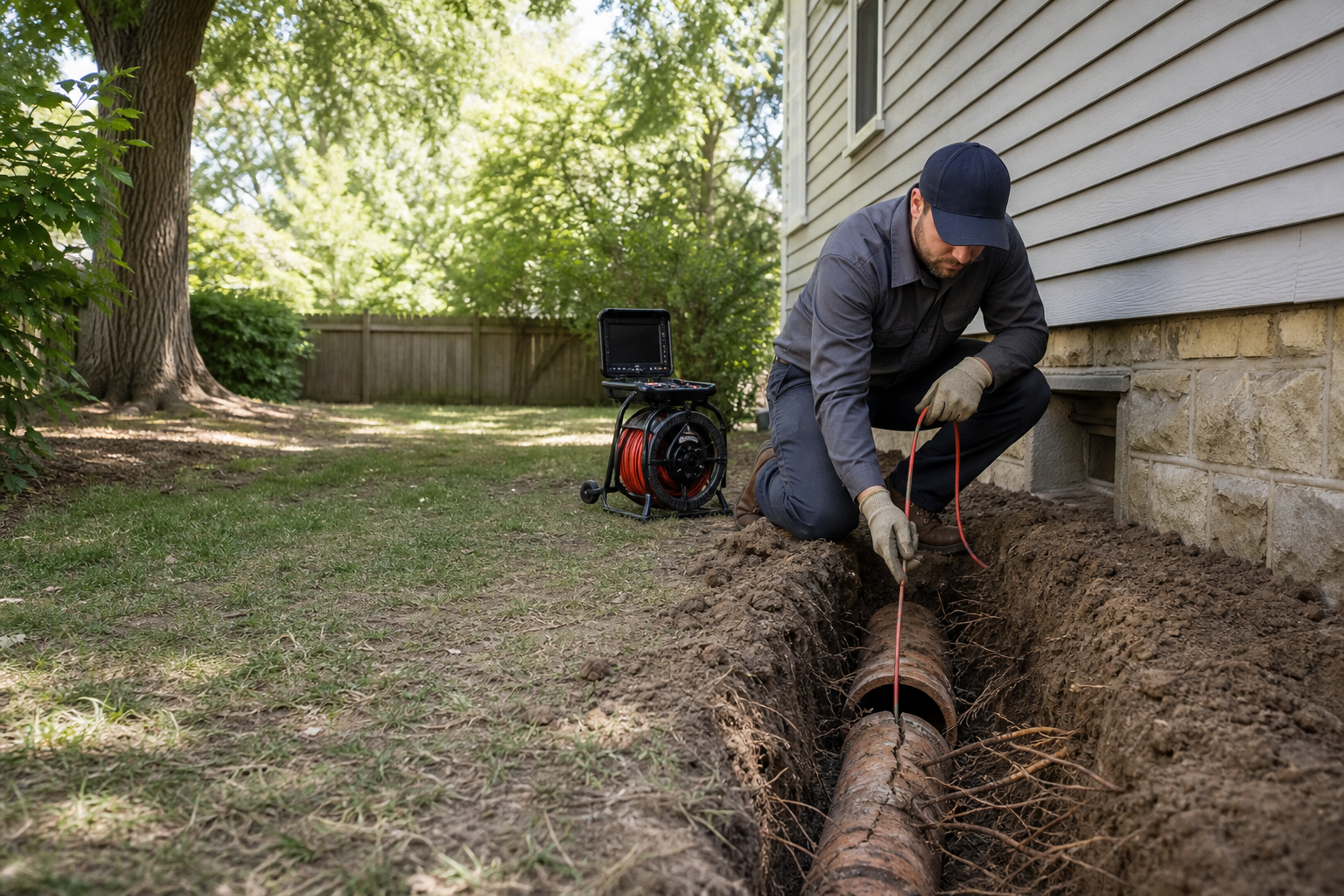
Here is what older neighborhoods along the Dora Street corridor and near Yokayo Elementary see most often: slow drains that keep coming back no matter how many times you clear them. The real problem is usually underground. Homes built before 1980 in this area were plumbed with clay sewer laterals, and those clay joints are exactly where tree roots go first.
Clay pipe uses bell-and-spigot joints every few feet, and each joint is a potential entry point. Mature oak and walnut trees common to established blocks send roots toward any moisture source, and a slow seep from a clay joint qualifies. A hairline crack can become a full blockage within a single growing season. Ignore partial root intrusion long enough and it becomes pipe collapse.
One slow drain is usually a local clog. Multiple drains backing up at the same time points to the main sewer line. Watch for these four signals:
These are among the 7 signs of a clogged sewer line in Ukiah that homeowners most often mistake for minor fixture problems. That distinction matters, because treating the fixture while the main line fails makes the situation worse.
A rental snake can clear a partial root mass temporarily. It will not remove embedded roots or reveal a collapsed section. A camera inspection is the only way to confirm what you are actually dealing with, and it prevents unnecessary excavation. If roots or pipe damage are confirmed, trenchless sewer repair using pipe lining or pipe bursting avoids tearing up driveways and established landscaping. Our sewer line services include camera inspection before any repair recommendation.
The inland valley climate catches a lot of homeowners off guard. Overnight lows in January regularly drop into the upper 20s and can fall below 20°F, colder than coastal areas like Fort Bragg. That temperature gap matters. Copper and CPVC pipes, standard in most homes built before 1990, become brittle at freezing temperatures and can split without warning.
Uninsulated crawl spaces are the highest-risk location. Exterior walls with no interior insulation come next, followed by pipes running through unheated garages. Homes in Redwood Valley and Potter Valley sit at higher elevations with less urban heat retention, so freeze events hit those areas more often and more severely. PEX pipe handles freezing temperatures better than copper or CPVC because it expands rather than cracks. If your home still has copper supply lines, that is useful information to act on before next winter. See our guide on how to prevent frozen pipes in this region for specific steps.
Never use an open flame to thaw a frozen pipe. Steam pressure builds inside the pipe and causes it to burst. The flame also creates a direct fire hazard inside wall cavities and crawl spaces. Contact our emergency plumbing team for help with burst pipes.
Homes in the older corridors north of downtown were largely built in the 1940 to 1975 window. If yours falls in that range, there is a real chance your supply lines are galvanized steel, and a smaller but significant chance they are polybutylene. Both materials fail systemically, not at a single point, and neither one gets better with time.
Galvanized steel supply lines corrode from the inside out. The zinc coating that resists corrosion depletes over 40 to 60 years. Once it is gone, rust builds on the pipe walls, restricting flow and releasing discolored water. Hard water only speeds that process along.
Polybutylene is gray plastic pipe used in some homes built between 1978 and 1995. Chlorine in treated municipal water causes micro-fracturing at the fittings over time. That is a systemic failure mode. You cannot repair your way out of it.
Two or more pinhole leaks repaired in the past three years is a strong signal that house repiping services with PEX will cost less long-term than continued spot repairs. PEX is flexible, freeze-resistant, and holds up well against hard water. Read through 5 signs your Ukiah home needs repiping if you are not sure where your system stands.
The inland valley location, aging housing stock, and groundwater chemistry here create a combination that coastal towns simply do not face. Each of the eight problems above is more common and more severe in this area because of three specific local conditions.
The valley’s groundwater basin draws from the Russian River alluvial aquifer. Water hardness varies by source and should be confirmed with a current water test. That is consistently higher than what coastal communities see. Scale builds up inside water heaters, narrows supply lines, and wears out fixture cartridges faster than most manufacturers expect. Our water filtration & treatment services are the practical long-term answer.
The blocks near Brush Street and around Ukiah High School have a high concentration of homes built in the mid-20th century. That means galvanized steel supply lines, cast iron drain stacks, and clay sewer laterals, all at or past their design life. Pipe-age problems in Willits and Cloverdale follow the same pattern.
Seasonal rain can increase groundwater and drainage concerns on some properties. Lower-lying properties near the flood plain see real groundwater intrusion during heavy rain years. A properly sized sump pump installation is the first line of defense for those homes. Geography is not destiny, but it does set the odds.
Prevention comes down to a few habits: keep grease out of kitchen drains, flush your water heater once a year, treat hard water at the source, and have older galvanized or clay lines inspected before they fail rather than after. A camera inspection can help identify root intrusion before it becomes a larger repair, and installing whole-house water treatment slows the scale that drives so many of these issues. Catching problems early is almost always the difference between a service call and a major repair.
Slow and clogged drains are the most common issue we see, driven by FOG buildup and hard water scale narrowing pipe walls over time. Root intrusion into sewer lines is a close second, especially in older neighborhoods near the Airport Park corridor and surrounding areas built before 1975.
One slow drain is almost always a fixture-level clog. If two or more drains back up at the same time, or your toilet gurgles when the bathroom sink drains, that points to the main sewer line. A camera inspection confirms the diagnosis before any work begins.
Yes. Groundwater in this region carries enough calcium carbonate, often above 300 mg/L, to deposit scale inside supply lines and water heater tanks progressively over years. Our water filtration & treatment services can slow that buildup significantly and extend the life of your plumbing system.
We do not quote repiping costs without seeing the home first. Price depends on square footage, fixture count, pipe material being replaced, and whether access is through a crawl space or slab. Request a free estimate through our house repiping services page and a technician will assess your specific situation.
Call immediately for burst pipes with active water flow, sewage backing up into the home, a gas smell near plumbing fixtures, or a water heater that is leaking. These situations cause progressive damage by the hour. Contact our emergency plumbing team for urgent help.
Homes built before 1970 most often present with galvanized steel supply line corrosion causing low pressure and discolored water, clay sewer laterals with root intrusion, and cast iron drain stacks with deteriorating joints. These are systemic issues, not single-point repairs.
Yes. Free estimates are available for all plumbing work. We serve communities across the region including plumber willits, ca, plumber cloverdale, ca, plumber healdsburg, ca, and plumber fort bragg, ca. Contact us to discuss service availability for urgent issues.
Most of the common plumbing problems on this list get more expensive the longer they go unaddressed. If you recognized two or more of them in your home, the right next step is a professional diagnosis, not another DIY attempt. Our office is at 1252 Airport Park Blvd STE A4, Ukiah, CA 95482. Call (707) 621-8282 or reach out through the website to schedule.
Call (707) 621-8282 to speak with our team directly. We’re ready to answer your questions, walk you through your options, and help you find the right solution for your needs. Whether you’re just starting to plan or ready to move forward, we’ll make the process simple and stress-free. Reach out today and let’s talk about how we can help.
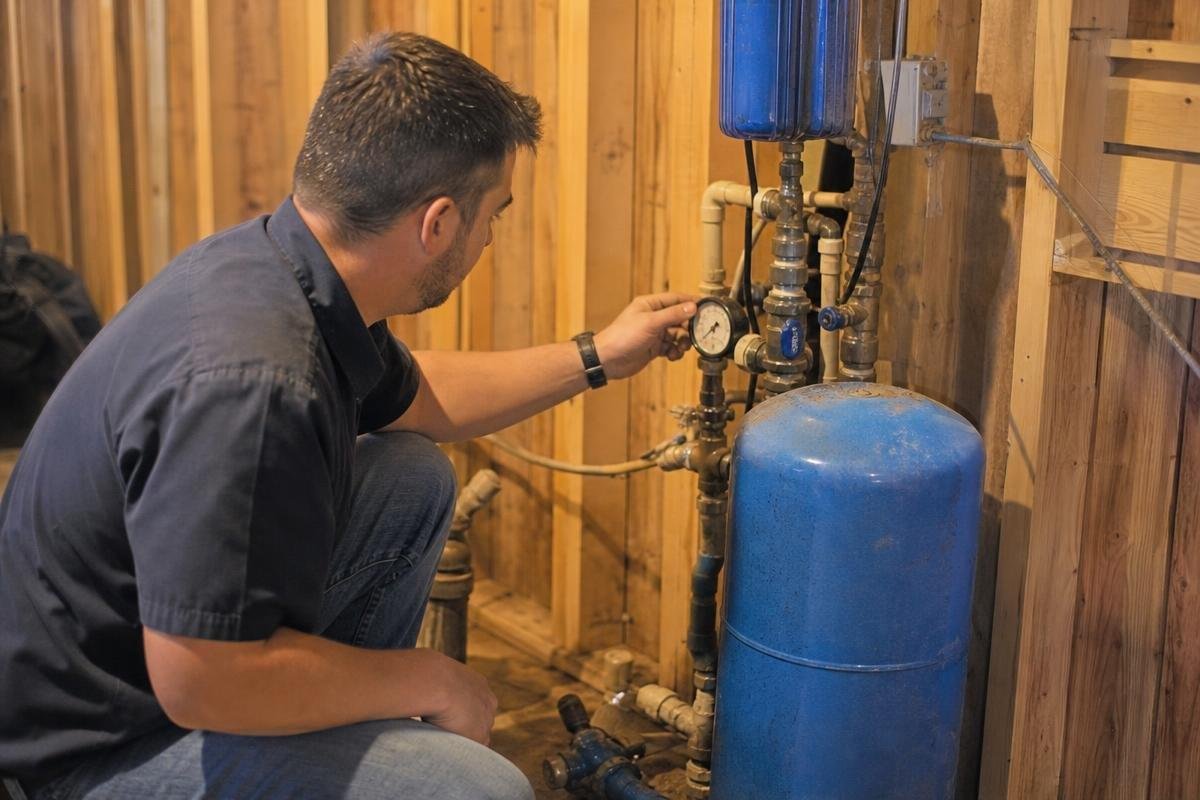
You may need well pump repair in Ukiah when your faucets sputter, the shower loses pressure, or water stops throughout the house. On private well properties in and around Ukiah, including rural areas such as Redwood Valley, these symptoms may involve the well pump, pressure tank, controls, a supply-line leak, or the well’s available water.…
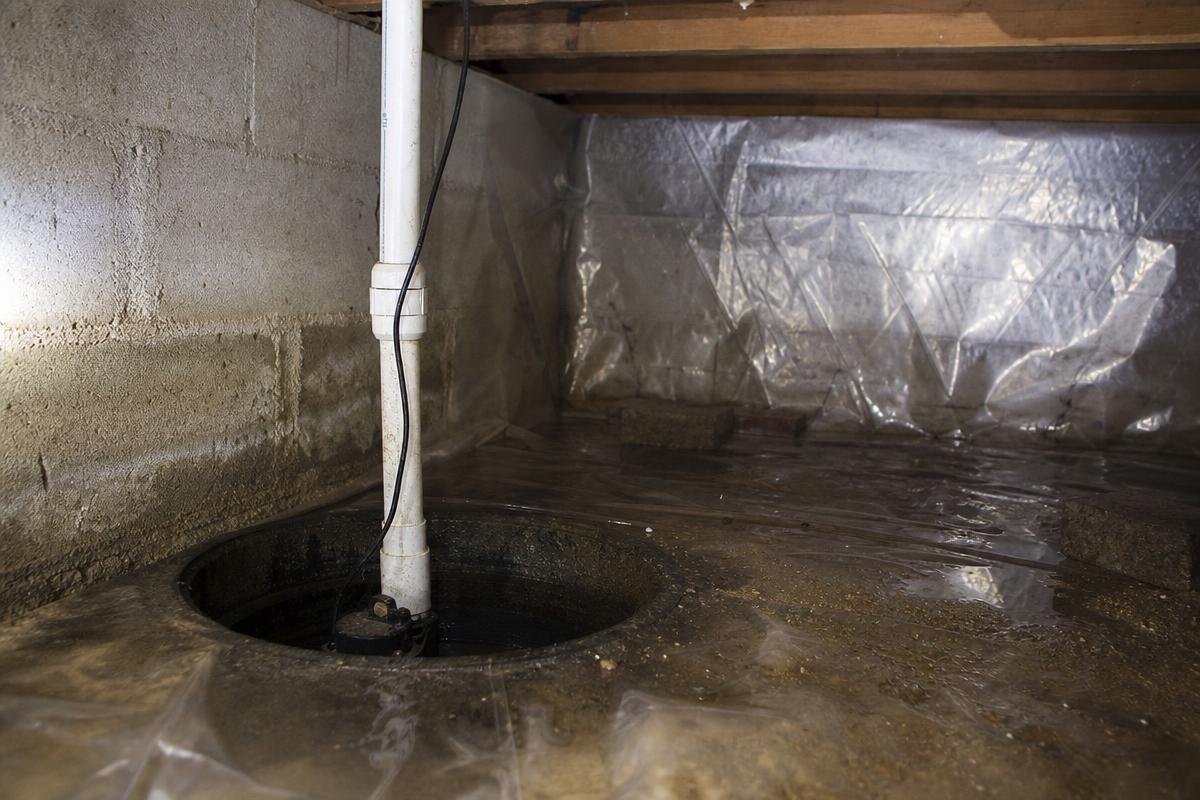
Water stains on a crawl-space wall, a damp smell after hard rain, or water collecting near the foundation can mean you need a sump pump. In Ukiah and nearby Mendocino County communities, winter storms, hillside runoff, valley-floor drainage patterns, irrigation, and downspouts that empty too close to the house can all contribute. AAA Organized Plumbing…
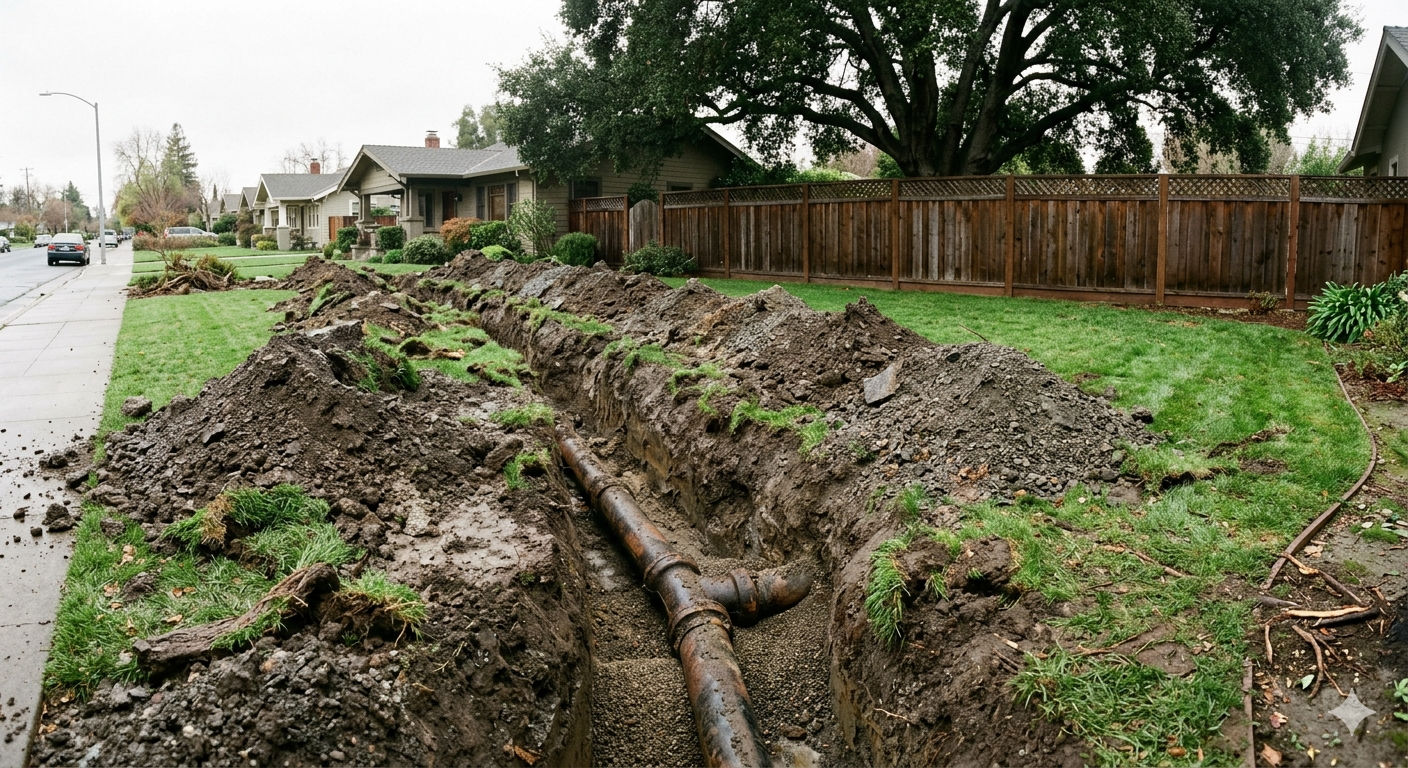
A failing sewer line forces a decision most homeowners are not prepared to make quickly. The pipe is underground, you cannot see it, and two very different repair approaches are on the table. One involves digging a trench across your yard. The other threads a solution through the existing pipe without disturbing the surface above…
