
Your septic tank does not send a warning before it backs up. For rural properties in Ukiah and across Mendocino County, knowing the right septic tank pumping frequency is what separates a routine service call from a failed drain field and a repair bill that runs into the thousands. Older septic systems can differ substantially in size, condition, and maintenance needs. AAA Organized Plumbing serves rural communities throughout Mendocino County, and we can tell you exactly where your system stands. Not sure when your tank was last pumped? Let’s find out before it becomes a bigger problem.
You bought the property. The inspection report said the septic system was in “good condition.” There was no pump date recorded anywhere, no sticker on the tank lid, no receipt in the file. That is more common than you think, especially on rural parcels in Redwood Valley, Potter Valley, and out toward Hopland. And it means you are already starting from zero.
Most rural homeowners in this part of Northern California have heard some version of “pump it every few years.” That rule of thumb is not wrong, exactly. It is just not specific enough to protect your system. It does not account for your tank size, how many people live in your house, whether your soil is the clay-heavy type common in the hills above Calpella, or whether your drain field is still recovering from last winter’s rains. Left unaddressed, those gaps add up to a failed drain field and a repair bill that dwarfs the cost of a dozen pump-outs.
This article gives you a real answer. You will get a Mendocino County-grounded pumping schedule recommendation, the variables that shift that schedule, and the warning signs that mean you are already overdue. If your property connects to a municipal line rather than a private tank, our sewer line services are a better starting point.
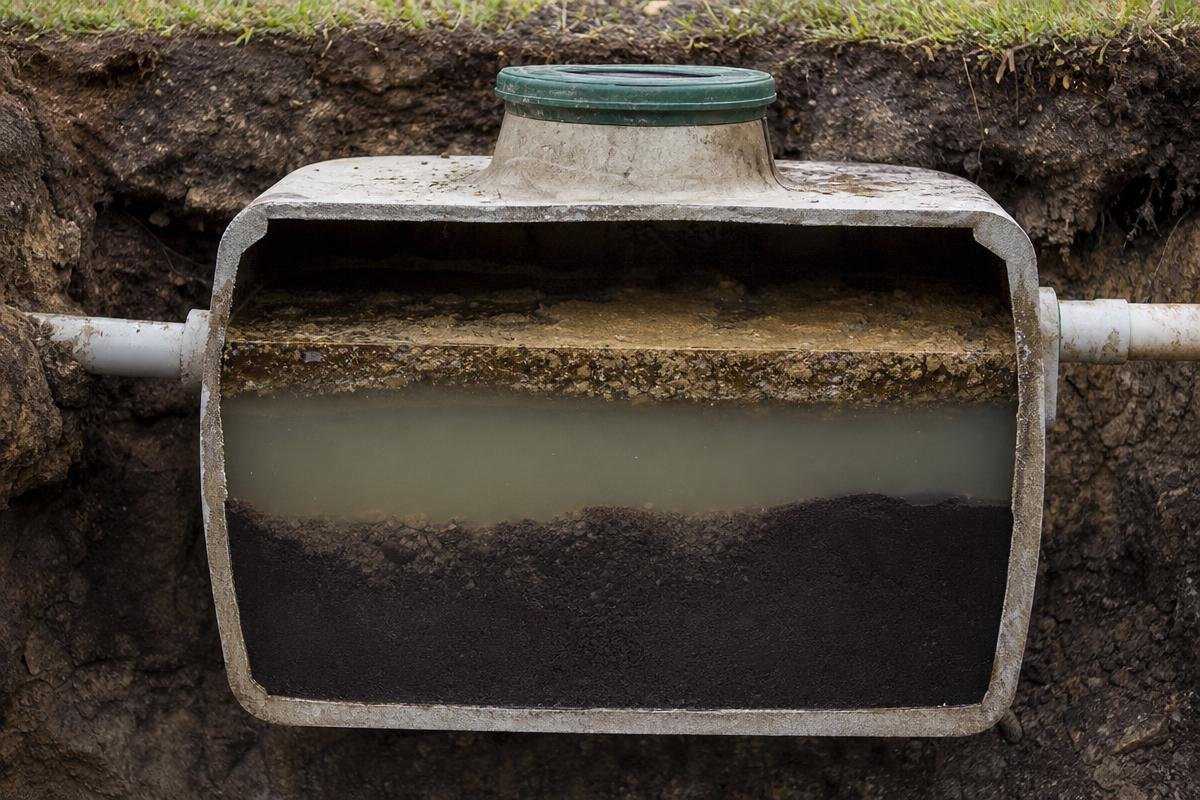
Your septic tank is not a storage container that fills up evenly. It separates waste into three distinct layers, and what happens to those layers over time is exactly what determines how often your tank needs to be pumped.
Everything that enters your tank separates by density. Fats, oils, and grease float to the top and form the scum layer. Below that sits the effluent layer, which is the liquid portion that eventually flows out to your drain field. Heavy solids sink and settle at the bottom as sludge, where bacteria break them down partially but never completely.
That word “partially” is important. Bacterial action slows the accumulation of sludge, but it does not stop it. Every flush, every load of laundry, every sink drain adds a small amount of material that will not break down further. It just sits there and builds.
According to the EPA, when the combined depth of sludge and scum reaches roughly one-third of your total tank volume, solids start moving toward the outlet baffle. That baffle is the only barrier between your tank and your drain field. Once solids pass it, they enter the drain field and begin clogging the soil pores in a process called biomat formation.
Biomat is not a clog you can clear with drain cleaning or any other service. It is a biological mat that seals the soil and destroys absorption capacity. Replacing a failed drain field in Redwood Valley, Hopland, or Calpella can cost tens of thousands of dollars, and unlike the tank, that soil-based leach area cannot be pumped back to health. The tank is the buffer you can service. The drain field is the irreplaceable component you are protecting every time you pump on schedule.
Rural properties in Potter Valley and along the Eel River corridor, for customers who call us from as far as Covelo, often have thinner soil profiles, which means their leach areas have even less tolerance for solids intrusion. If you are also dealing with related line issues, our trenchless sewer repair service handles sewer-side problems without tearing up your yard.
A pumping schedule depends on tank size, household use, and the condition of the system. That range assumes a standard tank size, average water use, and no garbage disposal running solids into the system. It is a reasonable starting point. But for rural properties in the Russian River watershed, it is only a starting point.
If you do not know when your tank was last pumped, treat that as your answer. Schedule a pump-out now. A tank with no service record is a tank that may already be overdue.
Tank size and the number of people in your home are the two biggest variables in any pumping schedule. A family of four fills a 1,000-gallon tank much faster than a retired couple fills a 1,500-gallon tank. Use this table as your baseline, then adjust for the local conditions covered below.
| Tank Size (gallons) | Household Size (people) | Estimated Pumping Interval |
|---|---|---|
| 750 | 1 to 2 | Every 2 to 3 years |
| 750 | 3 to 4 | Every 1 to 2 years |
| 1,000 | 2 | Every 4 to 5 years |
| 1,000 | 4 | Every 3 to 4 years |
| 1,250 | 4 | Every 4 to 5 years |
| 1,500 | 2 | Every 5 to 7 years |
| 1,500 | 5 to 6 | Every 3 to 4 years |
These intervals assume no garbage disposal use and no non-biodegradable items flushed. Add a garbage disposal and you can cut those intervals by roughly a year. Rural properties built before 1980 in areas like Hopland and Talmage often have undersized 750-gallon tanks that predate current county standards. Those tanks need attention more often, not less.
Schedule your Mendocino County pump-out before the wet season starts. Fall slots fill fast once October rains arrive, so book while the ground is still dry.
Soil conditions can affect how a septic system performs. Clay absorbs effluent slowly. When your drain field cannot move liquid out fast enough, hydraulic pressure backs up toward the tank. That compresses the tank’s working margin and accelerates sludge accumulation.
The rainy season from November through March makes this worse. A rising water table temporarily reduces drain field absorption capacity across the Russian River watershed. Your tank is doing more work with less help from the soil beneath it. Properties in Anderson Valley around Boonville and Philo, and on steeper terrain toward Willits, face a different problem: thinner soil over fractured rock creates unpredictable percolation that does not behave like valley-floor conditions at all.
The practical result is this: rural homeowners in this region should lean toward the shorter end of any pumping interval range shown above. Use a qualified septic professional’s recommendation for your property rather than applying a one-size-fits-all interval. If your system is also showing slow drain cleaning issues indoors, that can sometimes signal the septic side is under stress too.
The every-three-to-five-year rule is a starting point, not a guarantee. How often you need to pump depends on what goes into the tank every single day. Several factors can quietly cut that interval in half before you notice any warning signs.
A 1,000-gallon tank serving two people behaves very differently than that same tank serving five. More people means more daily water volume, and more water volume means sludge accumulates faster. Daily laundry loads, frequent dishwasher cycles, and long showers all push more liquid through the system, leaving less time for solids to settle properly.
High-efficiency toilets and low-flow fixtures genuinely slow that accumulation. Older high-volume toilets, common on rural properties in Calpella and Potter Valley built before 1990, can flush three to seven gallons per cycle compared to 1.28 gallons for a current WaterSense model. That difference adds up across thousands of flushes per year.
Yes, your garbage disposal really does make a significant difference. Disposals send fine food solids directly into the tank, accelerating sludge buildup faster than a household that scrapes plates into the trash. Septic professionals commonly recommend pumping every one to two years for heavy disposal users, compared to three to five years for households without one.
Septic additives, including enzyme treatments and bacteria packets, are widely marketed, but the EPA and university extension programs are consistent: they do not replace pumping and some chemical additives can actually harm the microbial balance in your drain field. Save the money and schedule the pump-out instead.
Non-biodegradable items cause a separate problem. “Flushable” wipes, paper towels, feminine hygiene products, and medications do not break down in the tank. They accumulate as solids and shorten your pumping interval whether you notice it or not. If you have questions about what a slow toilet repair & installation visit might reveal, that conversation is worth having before the tank backs up.
Slow drains in February are not a coincidence. When the rainy season saturates the soil, your drain field temporarily loses its ability to absorb effluent. The tank fills faster because liquid has nowhere to go. Low-lying parcels near Redwood Valley and creek corridors around Hopland are especially vulnerable after back-to-back wet winters, a pattern covered in more detail in the local conditions section above.
If your drains slow down or your drain cleaning needs repeat attention every winter, that is your system telling you the pumping schedule needs to move up, not that the pipes are the problem.
Not sure how your household habits are affecting your pumping schedule? Call us at (707) 621-8282 and we can help you figure out the right interval for your property.
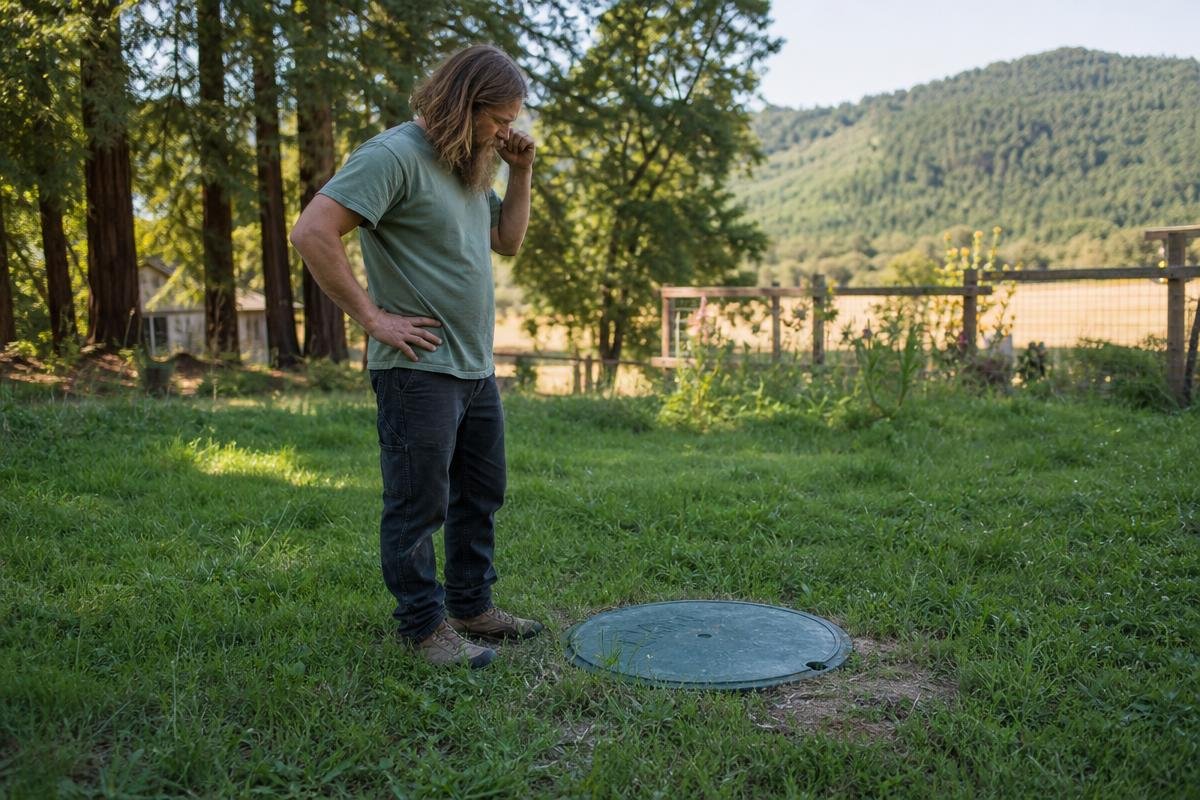
The slow drain in your guest bathroom is easy to blame on hair or soap buildup. Sometimes that is exactly what it is. But sometimes it is your tank telling you something. Knowing the difference can save you from a very expensive repair.
One slow drain usually points to a localized clog. If you notice multiple drains slowing down at the same time, that is a different problem. When the kitchen sink, both bathrooms, and the laundry drain are all sluggish together, the tank is the likely cause, not the pipes.
Sewage backing up into your home is not a wait-and-see situation. That is a call for emergency plumbing right now. Waste in your living space creates a health hazard fast.
Properties in Redwood Valley, Hopland, and Calpella sit on clay-heavy soils that already drain slowly. That makes yard signs harder to read, but not impossible. Dry-weather sogginess is the red flag. Wet ground over your drain field during a rainy January could be seasonal. Wet, spongy ground over the drain field in July is your tank failing.
A full tank does not just back up into the house. It pushes solids into the leach area, and that repair is measured in tens of thousands of dollars, not hundreds. Septic tank maintenance in this area is not optional. If you are seeing any of these signs, contact us before the problem moves from the tank to the field.
Your plumbing and your septic system share a boundary, and knowing where that boundary sits saves you time and money. A licensed plumber handles everything from the fixtures inside your home to the sewer line running out to the septic tank inlet. Pumping the tank itself is a separate job, done by a septic contractor with a vacuum truck. Those are two different scopes of work, and no reputable plumber will tell you otherwise.
Here is what our team can do on the plumbing side of a septic setup. We inspect and repair the sewer line from your home to the tank, clear blockages in the inlet line, run a camera to confirm the pipe is intact, and repair or replace a deteriorated inlet baffle. That camera inspection is often the fastest way to answer a question rural homeowners in Willits, Laytonville, and the Anderson Valley ask us regularly: is my slow drain a pipe problem or a tank problem? Those two causes have completely different fixes, and guessing wrong wastes money. Our sewer line services cover that full diagnostic and repair scope.
What we cannot do is pump the tank. That requires a licensed septic pumping contractor and a vacuum truck. We will tell you that plainly rather than send you in the wrong direction.
Small plumbing problems inside the house can quietly damage your septic system over time. A running toilet can add unnecessary water to a septic system and should be repaired promptly. That volume dilutes the beneficial bacteria that break down solids, and it pushes effluent into the drain field faster than the soil can absorb it. Our toilet repair & installation can stop that waste before it compounds into a drain field repair.
Leaking faucets and supply lines create the same problem at a slower rate. Continuous water input keeps the tank agitated and shortens the time solids have to settle. For rural properties in Lake County and the hills above Boonville, where drain fields already work harder during wet winters, that extra load matters. If your home has a water softener, ask a qualified professional about a discharge setup that is appropriate for your septic system. If your home has a softener, the discharge method matters for septic tank maintenance. Our water filtration & treatment services can help you find a discharge setup that protects your system.
If you are not sure whether a slow drain is a pipe issue or a full tank, a camera inspection of the line from the house to the tank is the fastest way to find out. Call us at (707) 621-8282 or stop by our office at 1252 Airport Park Blvd STE A4, Ukiah, CA 95482.
Most households in the Ukiah area pump every 3 to 5 years. If your property sits on clay-heavy soil, like many parcels near Boonville or Covelo, or if you have more than three people in the house, lean toward every 3 years. If you do not know when the tank was last pumped, schedule a service now and have the contractor measure sludge depth while they are on site.
Most residential tanks in the county range from 1,000 to 1,500 gallons. Properties built before 1980 may have 750-gallon tanks that predate current county standards. Those smaller tanks fill faster and need more frequent pumping. Check county health department permit records or schedule a septic inspection to confirm your tank size.
Yes, but it shortens your pumping interval. Food solids add significant load to the tank and typically cut your schedule by one to two years. If you use a disposal regularly, budget for pumping every 2 to 3 years instead of 3 to 5.
Solids overflow into the drain field and form a biomat, a layer of organic material that clogs the soil. Once that happens, pumping the tank does not fix it. The drain field has to be rehabilitated or replaced, which costs significantly more than routine pumping.
Yes. During the wet season, a saturated drain field absorbs effluent more slowly. Properties in the Anderson Valley or along the Eel River corridor, where soils are thin over fractured rock, are especially vulnerable. Back-to-back wet winters can shorten a tank’s working interval by six months to a year.
Not always. A single slow drain usually points to a pipe clog, not the tank. Multiple slow drains at the same time, or gurgling after you flush, are stronger indicators of a full tank or a blocked sewer line services. A camera inspection can tell you exactly where the problem is. You can also review the signs of a clogged sewer line in Ukiah to compare what you are seeing.
Sewage backup is a plumbing emergency. Call us at (707) 621-8282 any time. Our team provides emergency plumbing around the clock. We can clear the blockage in the line from your house to the tank and confirm whether the tank itself needs immediate attention.
If you do not know when your tank was last pumped, or you are seeing slow drains, gurgling toilets, or soggy ground over the drain field, call us at (707) 621-8282. We serve rural communities throughout the county from our office at 1252 Airport Park Blvd STE A4, Ukiah, CA 95482. We can inspect the line, find the problem, and get you pointed toward the right next step.
Call (707) 621-8282 to speak with our team directly. We’re ready to answer your questions, walk you through your options, and help you find the right solution for your needs. Whether you’re just starting to plan or ready to move forward, we’ll make the process simple and stress-free. Reach out today and let’s talk about how we can help.
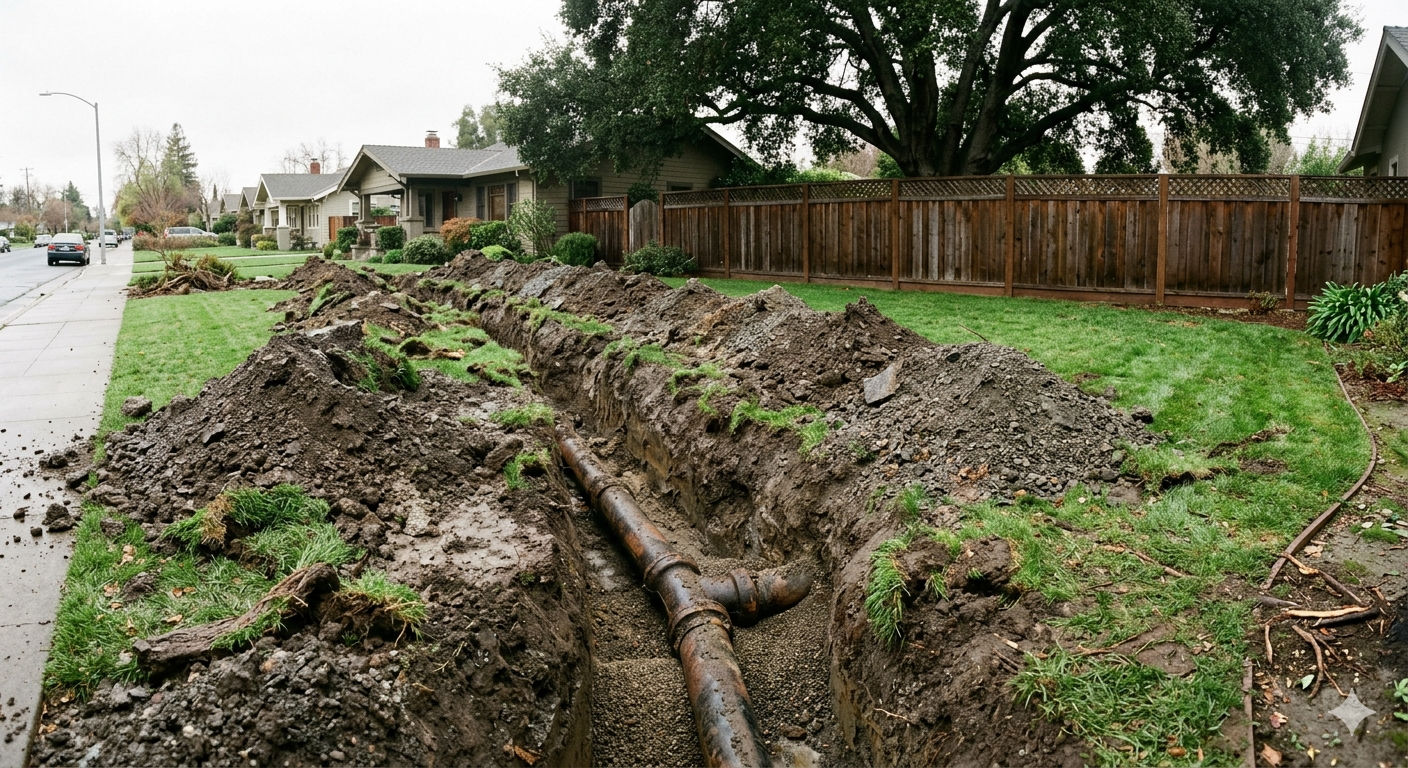
A failing sewer line forces a decision most homeowners are not prepared to make quickly. The pipe is underground, you cannot see it, and two very different repair approaches are on the table. One involves digging a trench across your yard. The other threads a solution through the existing pipe without disturbing the surface above…
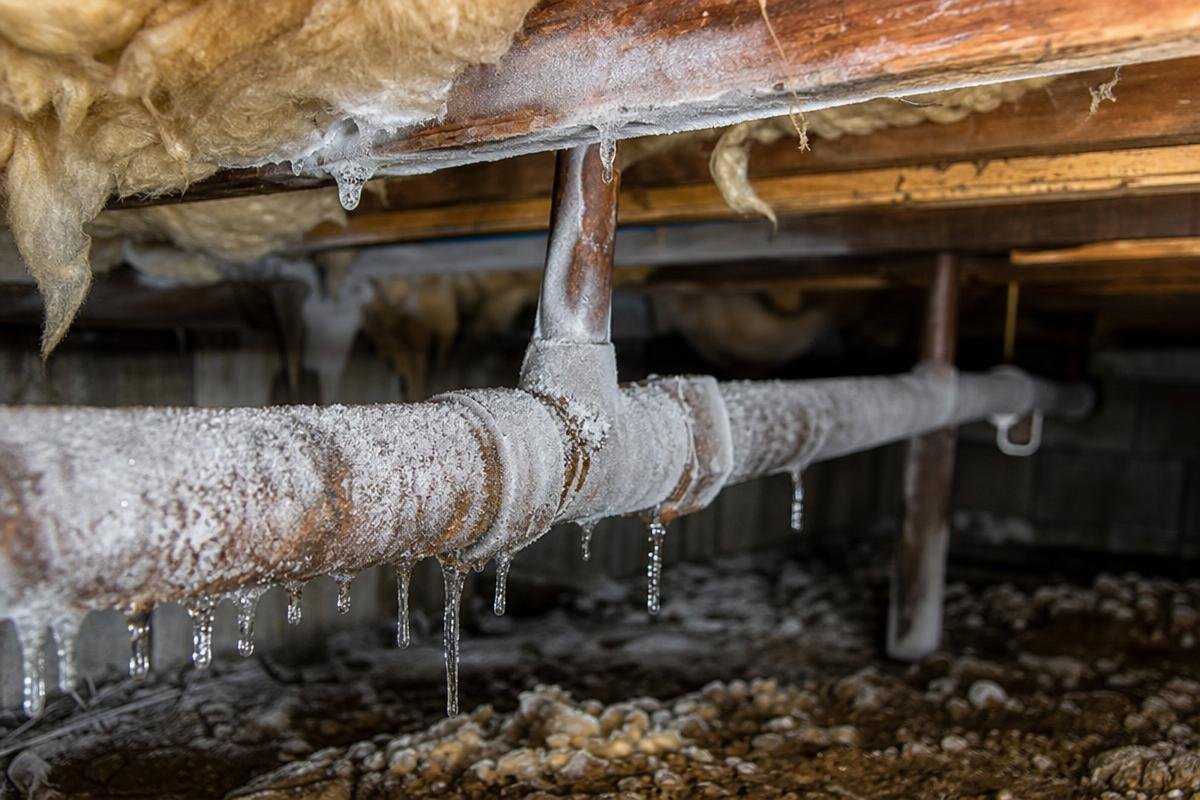
Ukiah winters catch a lot of homeowners off guard. Overnight lows in the upper 20s are common through the heart of winter, and homes built in the mid-20th century often have pipes running through uninsulated crawl spaces and exterior walls with almost no cold protection. Frozen pipes prevention is not complicated, but the mistakes that…
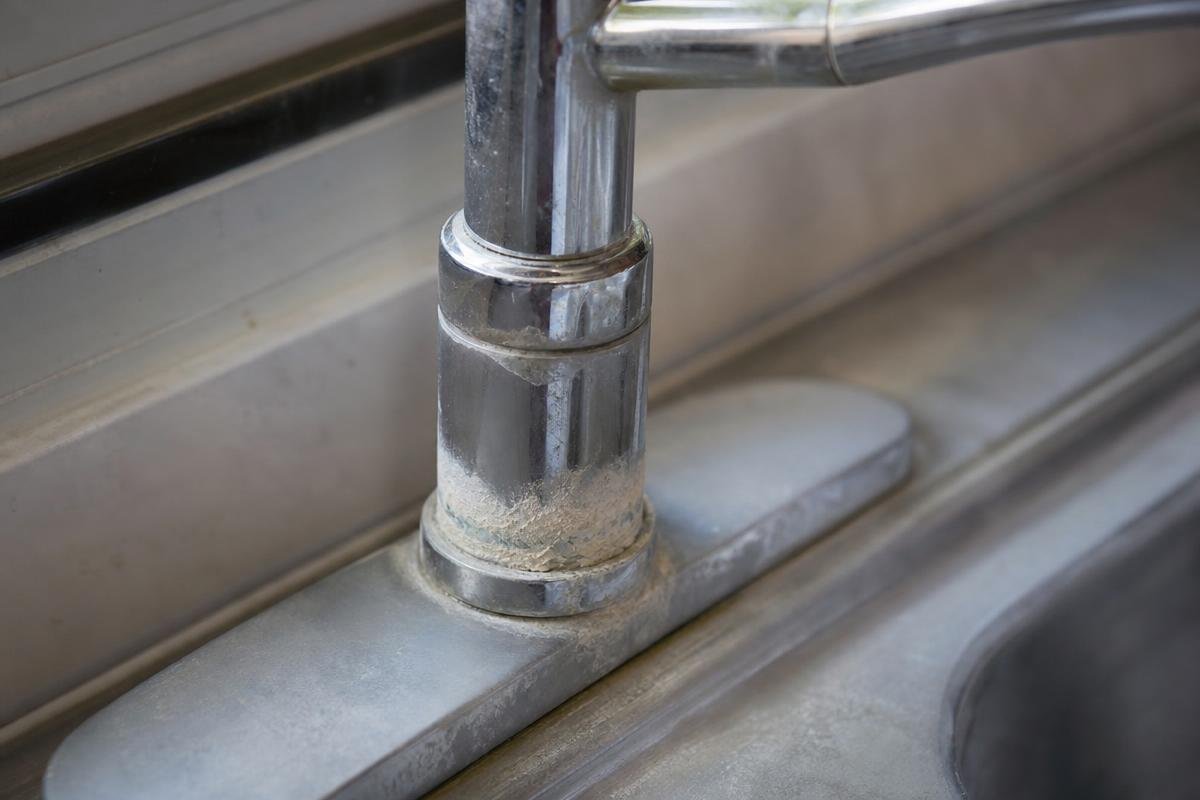
The white crust around your faucet. The filmy residue that won’t rinse off your dishes. If you live in Ukiah or the surrounding Mendocino County area, these are not random annoyances. The Russian River watershed sits above limestone-rich geology that pushes calcium and magnesium into your water supply, often above 10 grains per gallon. Hard…
